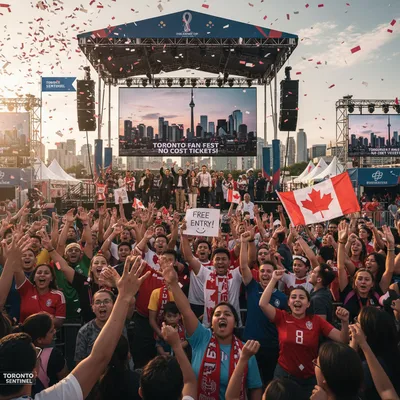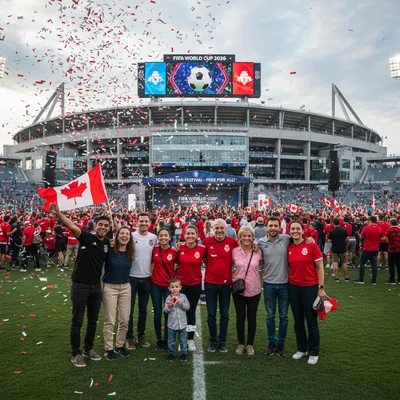
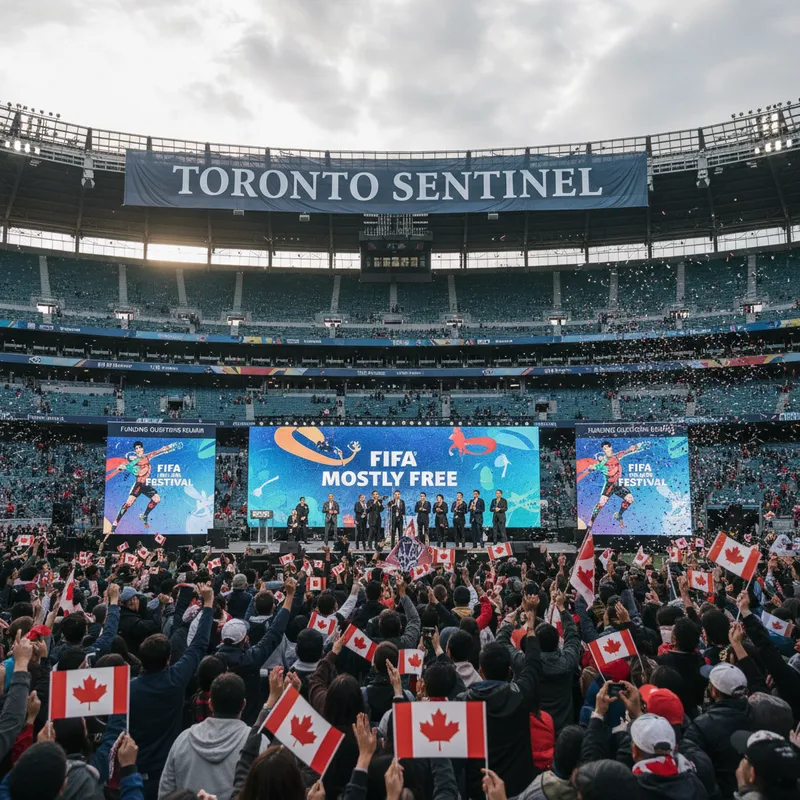
Toronto will host a largely free, 22-day fan festival during the 2026 FIFA World Cup, city officials announced Monday, promising a vibrant celebration of food, music, and soccer at the Fort York National Historic Site and the Bentway.
The "World in a City" festival is scheduled to run between June 11 and July 19, offering fans massive screens to watch the matches, live DJ sets, musical performances, art installations, and a variety of street food. The announcement marks a significant reversal for the city, which had previously considered charging admission to cover rising costs associated with hosting the global tournament.
The decision to keep the events mostly free follows a public backlash against an earlier proposal. City staff had suggested that escalating costs, which have seen Toronto's total hosting bill rise to $380 million, would necessitate an entry fee. A report had floated a potential admission price of $10 for general access and between $100 and $300 for VIP experiences.
A reversal on ticket prices
The idea of charging for what was initially promoted as a free public benefit of hosting the World Cup drew sharp criticism from residents and politicians alike. The negative public reaction prompted city council to push for a solution that would preserve free access for the majority of attendees, which led to the plan unveiled this week.
Neighbours, newcomers, visitors, doesn’t matter who you are, they are in for a treat.
While general admission will be complimentary, fans will need to secure tickets in advance due to limited capacity. An online portal for ticket registration is set to launch on May 6. This system aims to manage crowds and ensure a safe and enjoyable experience for all attendees at the historic venues.
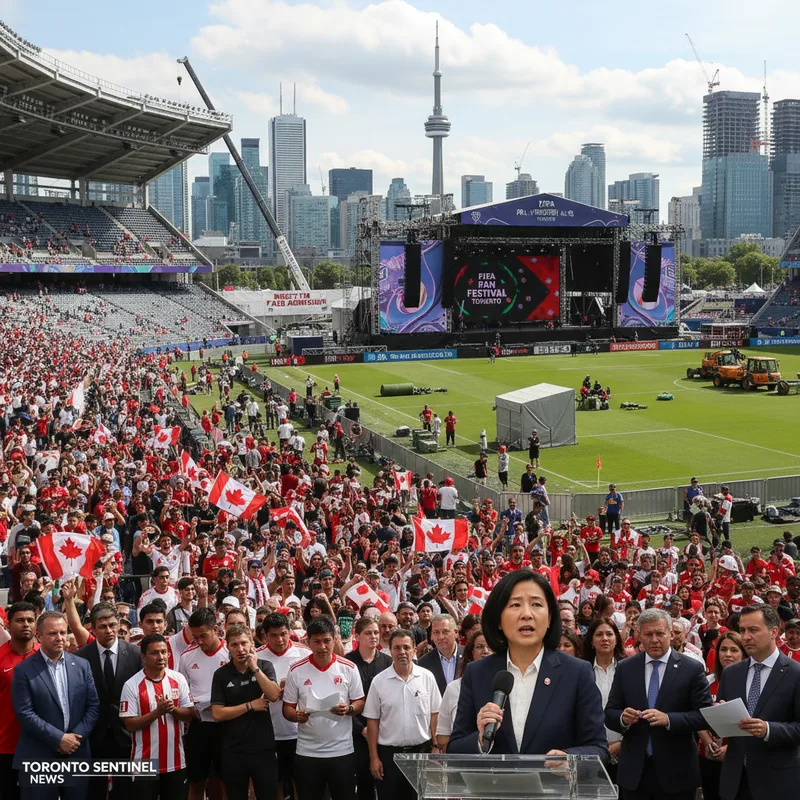
The festival is a cornerstone of Toronto’s plan to create a memorable World Cup experience that extends beyond the ticket holders for the matches themselves. It aims to capture the energy of the tournament and reflect the city's multicultural fabric, inviting everyone to participate in the global event. For those looking for other budget-friendly activities, the city offers many free things to do throughout the year.
Historic site to host modern celebration
The choice of the Fort York National Historic Site as a primary venue is a nod to Toronto's deep history. The area, originally a garrison founded in 1793 at the mouth of Toronto Harbour, is a place of significant historical importance. It was the site of the Battle of York during the War of 1812 and represents the colonial foundations of the city. More deeply, it sits on land that has been a crucial meeting and trading point for Indigenous peoples for thousands of years, including the Mississaugas, the Anishinaabe, the Huron-Wendat, and the Haudenosaunee.
The name Toronto itself is derived from the Mohawk word 'Tkaronto,' meaning 'where there are trees standing in the water,' referring to ancient fishing weirs. Hosting a global 'World in a City' event at this layered historical site offers a unique opportunity to connect the city's ancient past with its diverse present. The juxtaposition of a modern, international soccer festival against the backdrop of a foundational historic site allows for a reflection on the city's evolution from a small British outpost to a sprawling, multicultural metropolis.
The festival grounds at Fort York and the adjacent Bentway, a unique public space located under the Gardiner Expressway, will be transformed to welcome hundreds of thousands of visitors over the 22 days of programming. The combination of green space at Fort York and the urban grit of the Bentway provides a distinctly Toronto setting for the festivities.
Funding questions linger
Despite the celebratory announcement, a major challenge remains unresolved: the budget. While officials have committed to a mainly free-access model for the public, they have not yet detailed how the city will cover the costs. The initial backlash against ticketing highlighted the public expectation for free events, but removing ticket revenue leaves a significant hole in the event's funding plan. For communities facing similar funding discussions, LA leaders meet with Trump to press for wildfire recovery funds.
The city's executive committee and council are still exploring various options to pay for the festival without passing the cost directly on to attendees. This financial uncertainty hangs over the preparations, even as the programming and logistical planning move full steam ahead. The pressure is on to find a fiscally responsible solution that doesn't compromise the quality of the fan experience or place an undue burden on Toronto taxpayers.
As the May 6 ticket release date approaches, all eyes will be on city hall as it works to finalize the budget for what promises to be one of the biggest public celebrations in Toronto's history. The success of the "World in a City" festival will depend not only on the quality of its programming but also on the city's ability to manage its ambitious plans financially.