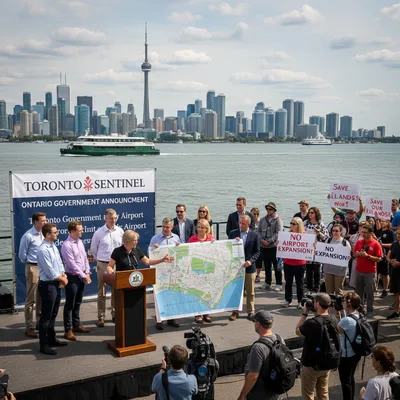
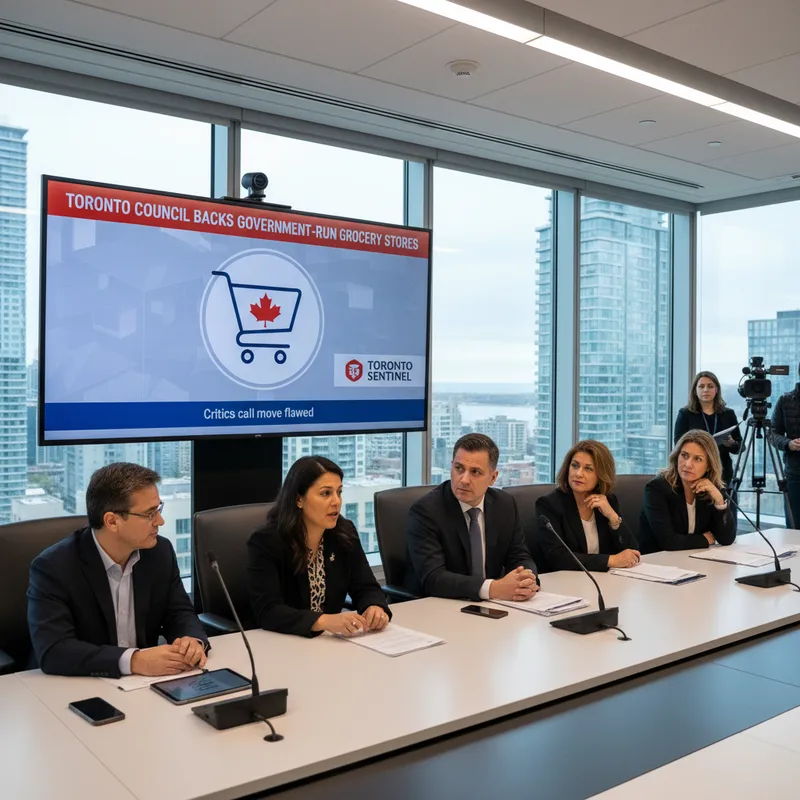
Toronto City Council has voted in favour of a motion to study and establish up to four government-run grocery stores, a direct response to the escalating food affordability crisis gripping the city. The move, inspired by a similar public grocery initiative in New York City, aims to provide residents with more affordable food options as high inflation continues to strain household budgets.
The proposal has ignited a fierce debate about the role of government in the marketplace, pitting a desire for political action against fundamental economic principles. While proponents see it as a necessary intervention to ensure food security, critics, including analysts from the Fraser Institute, argue it is a misguided policy that defies basic economics and will ultimately burden taxpayers.
The city’s plan comes as many Torontonians find themselves struggling with the cost of living. Recent data shows that 2.2 million Canadians access a food bank every month, and 2.5 million children are currently food-insecure. In stores across the city, shoppers are increasingly forced to make difficult choices, with some even calculating costs on basic items in dollar stores, once seen as the final stop before forgoing a purchase altogether.
A controversial solution to food inflation
According to a commentary by Fraser Institute directors Alex Whalen and Jake Fuss, the concept of a government-subsidized grocery store masks the real cost. They argue that while the government could sell an item like bacon for $3, well below its current Ontario market price of around $6.52, the remaining $3.52 doesn't disappear. Instead, that cost is simply transferred to the public through the municipal budget.
“Your tax dollars will pay for someone else’s bacon. and city hall may even raise taxes to help pay for the bacon,” they wrote. This shifting of costs, they contend, means there is no “free lunch,” and taxpayers will inevitably foot the bill for the subsidized groceries, whether they shop at the government stores or not.
The core of the issue, according to economic analysts, is not corporate greed but a complex mix of market forces. Research from the Bank of Canada points to rising import and energy costs, along with wages, as the primary drivers behind grocery price inflation. The argument that “greed” is the culprit has been largely dismissed by economists, who note that greed is a constant factor and cannot explain fluctuations in prices.
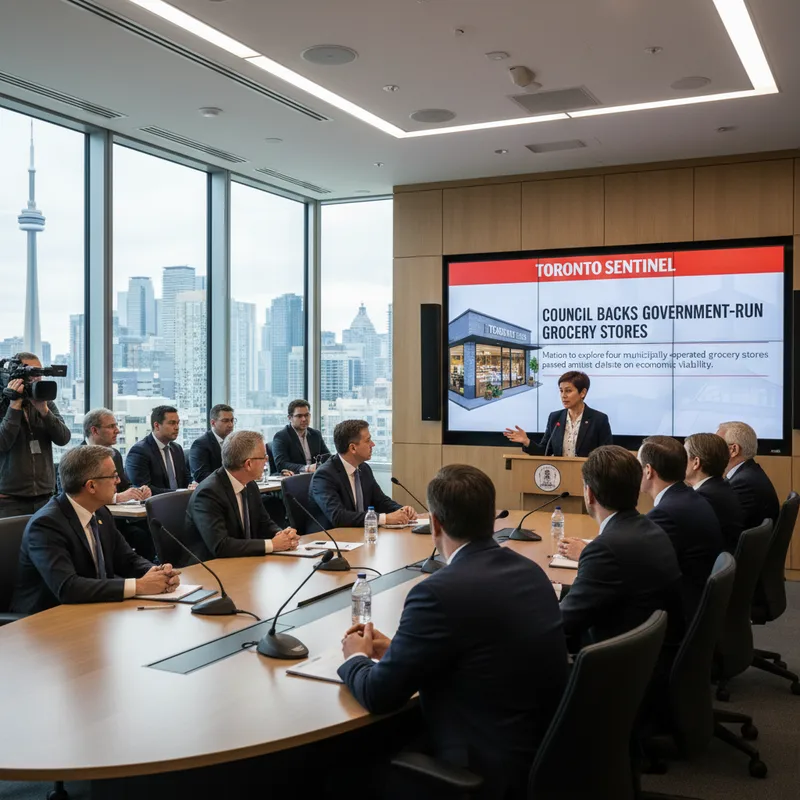
The limits of government intervention
Critics of the Toronto plan point to a history of government-run enterprises as a cautionary tale. The Fraser Institute analysts question why, if a government could painlessly lower prices for groceries, it would not do the same for cars, clothing, or smartphones. They draw parallels to failed experiments with socialism in Eastern European countries like Estonia and Poland, which led to widespread shortages and a lack of consumer choice.
Closer to home, they note that the federal government once owned major enterprises such as Air Canada, Petro-Canada, and the Canadian National Railway (CN), all of which were eventually privatized. The consensus among free-market proponents is that governments are not equipped to operate businesses efficiently and that such ventures are destined to fail.
Instead of entering the grocery business itself, critics suggest the city could foster greater competition by streamlining regulations and lowering permit hurdles for new private grocery stores. This, they argue, would naturally drive down prices through market forces without putting taxpayers on the hook. Government policies that are already in place, such as supply management and the federal carbon tax, are also cited as factors that contribute to higher food prices for Canadian families.
Jurisdictional questions and the city's role
Beyond the economic arguments, there are questions about whether operating grocery stores falls within the city's mandate. The provincial City of Toronto Act outlines the municipal government's responsibilities, which include services like roads, parks, police, and waste removal. The Act does not list groceries as a municipal service.
This raises potential jurisdictional challenges. The relationship between the City of Toronto and the Government of Ontario has been contentious, with the province historically holding significant power over municipal affairs. A 2021 Supreme Court of Canada decision, Toronto (City) v Ontario (Attorney General), affirmed the province's authority to legislate over the city, even making substantial changes such as altering the size of city council during an election. This precedent suggests the province could potentially block or complicate the city's grocery store ambitions.
As council moves forward, city staff will be tasked with developing a business case and feasibility study for the four proposed locations. The plan will face intense scrutiny from economic watchdogs, political opponents, and a public desperate for relief from high food prices. While the motion represents a bold step towards addressing a pressing issue, it remains to be seen whether the plan is economically viable or legally permissible. For now, the debate continues over whether the city should be in the grocery business at all.