Toronto Metropolitan University (TMU) has officially opened the first phase of its new School of Medicine in Brampton, a landmark project designed to address the pressing need for physicians in the Peel region while pioneering a new model for medical education in Canada.
Designed by Diamond Schmitt Architects, the new facility is housed within the retrofitted Bramalea Civic Centre. The project transforms the existing civic building into a state-of-the-art academic and healthcare hub. It combines medical training facilities with a public primary care clinic, aiming to embed students directly within the community they will eventually serve.
This integrated approach is a direct response to the healthcare crisis in Brampton and the wider Peel region, which is one of the fastest-growing and most diverse areas in the country. For years, local leaders and healthcare advocates have highlighted a significant doctor shortage, with the region having one of the lowest ratios of family doctors to residents in Ontario. The new school aims to attract and retain medical talent by providing training and clinical opportunities directly within this underserved community.
A new model for medical education
The TMU School of Medicine's curriculum is built on a foundation of community-integrated learning. From the outset, students will be exposed to patient care through the on-site clinic and partnerships with local healthcare providers. This model contrasts with traditional medical education, where clinical exposure is often delayed until the later years of study.
The facility’s design is central to this educational philosophy. It features active learning classrooms that support collaborative, case-based instruction. High-tech simulation suites, complete with glazed walls for observation, allow students to practice clinical scenarios in a realistic but controlled environment. These spaces are designed to be flexible, accommodating various learning and teaching styles essential for modern medical training.
Anatomy labs and other specialized training areas are equipped with the latest technology to prepare students for the evolving demands of the healthcare field. The focus is not just on clinical skills but also on developing a deep understanding of the social determinants of health and the specific needs of a diverse patient population like that in Peel.
Community health at its core
A key component of the new school is the integrated primary care clinic, which will offer essential health services to the public. This serves a dual purpose: providing much-needed healthcare to Brampton residents while offering students invaluable, real-world clinical experience under supervision.
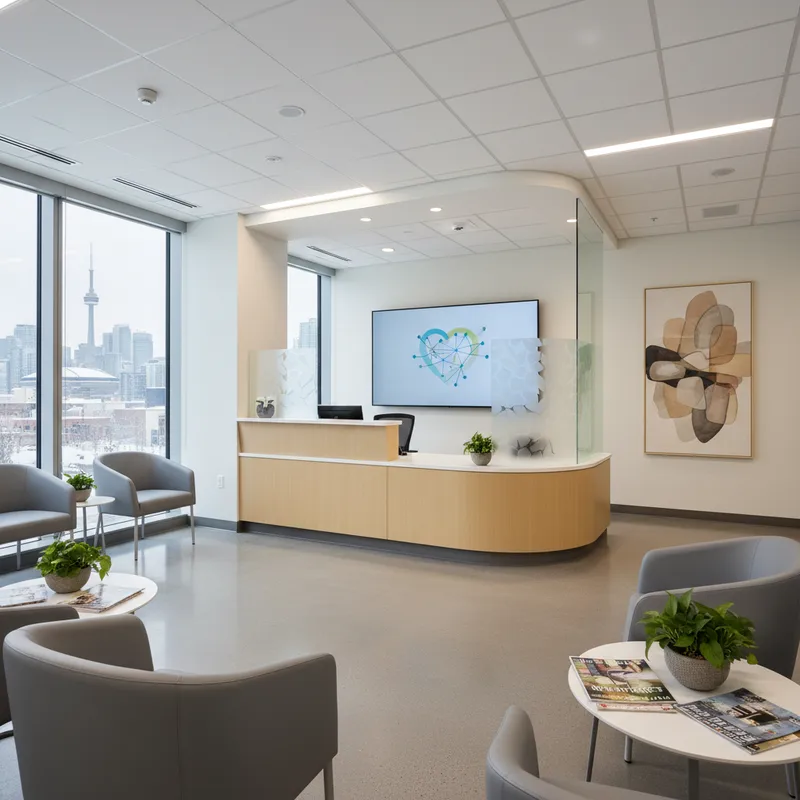
The clinic’s design thoughtfully separates the public-facing areas from the academic spaces to ensure patient privacy and a welcoming atmosphere. The inclusion of a community kitchen and flexible multi-purpose rooms underscores the school's commitment to holistic health and wellness, providing space for public health programming and events.
By embedding a public clinic within the medical school, TMU aims to break down barriers between academic medicine and community practice. This model is expected to foster a stronger connection between future doctors and the communities they serve, a strategy that health experts believe is key to addressing care gaps in underserved areas. This initiative aligns with broader trends in healthcare, including efforts to provide more accessible and community-focused services, similar to the goals of various Ontario Health Teams and guides like Moving to Cairns QLD: a local’s guide to suburbs, schools and life in the tropics (2026).
Architecture that heals and teaches
The transformation of the Brutalist-era Bramalea Civic Centre by Diamond Schmitt Architects is a significant example of adaptive reuse. Instead of demolishing the structure, the design honours its architectural heritage while infusing it with modern functionality and a new sense of purpose.
The design philosophy is rooted in evidence-based and biophilic principles, which connect health outcomes to the built environment. Large windows and skylights are used extensively to flood the interior with natural light, a feature known to improve well-being for students, staff, and patients. The use of natural materials, primarily light wood throughout the facility, creates a warm and calming atmosphere, moving away from the sterile aesthetic traditionally associated with clinical environments.
Views of the adjacent parkland and a nearby ravine are framed throughout the building, strengthening the connection to nature. An internal courtyard provides a tranquil outdoor space for reflection and collaboration. This focus on creating a healthy environment reflects a growing understanding in medicine that the physical space itself can be a tool for healing and learning. While this project focuses on human health, the importance of healthy environments is a global concern, as seen in studies on how microplastics threaten marine ecosystems.
Looking ahead
Phase one of the TMU School of Medicine represents a significant investment in the future of healthcare for Brampton and the province. The project not only provides a cutting-edge facility for training the next generation of doctors but also delivers immediate benefits to the community through its integrated clinic and public spaces.
As the school welcomes its first cohort of students, it will become a living laboratory for a new kind of medical education. one that is more collaborative, community-focused, and responsive to the needs of a diverse and growing population.
The success of this model could have far-reaching implications, potentially influencing how other medical schools across Canada approach education and community engagement. For now, it stands as a symbol of progress for a region that has long advocated for better access to healthcare. The first class of medical students is expected to begin their studies in 2025, marking a new chapter for both TMU and the city of Brampton.