
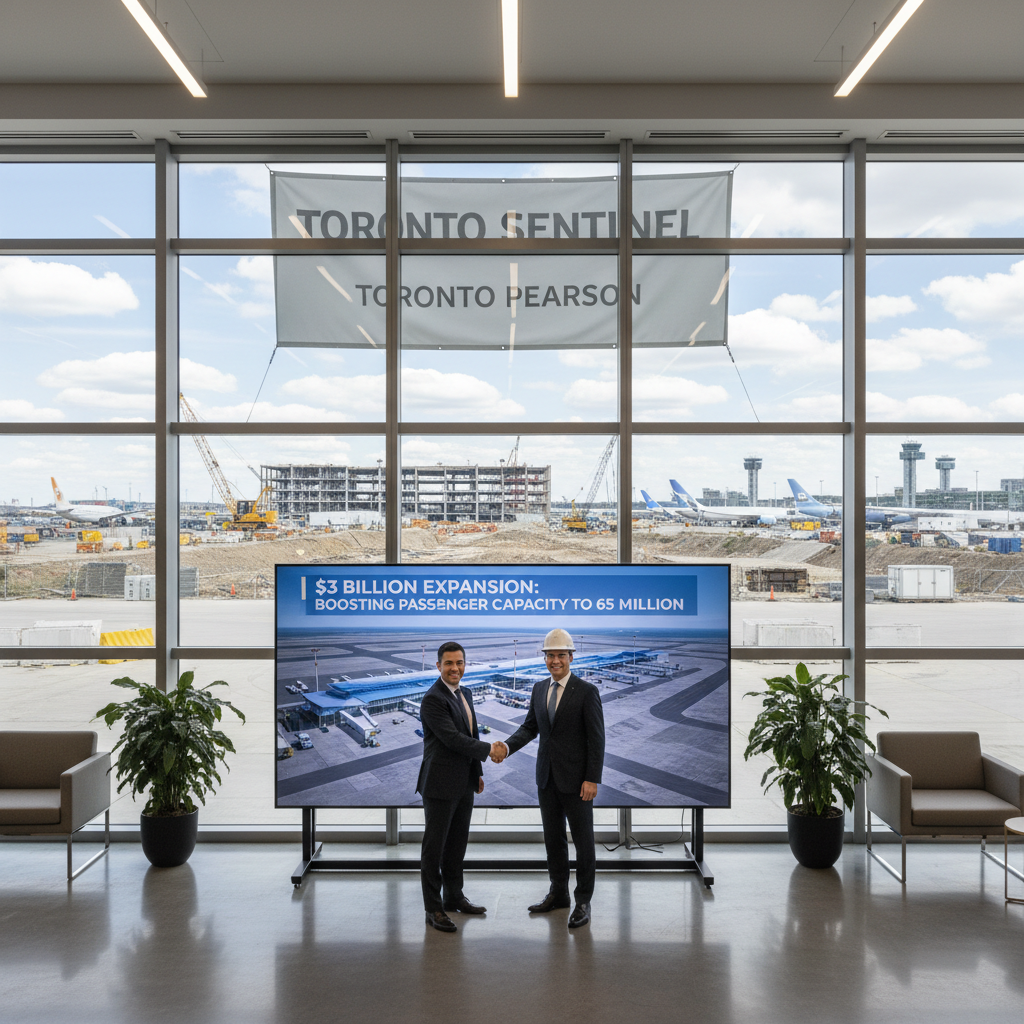
Construction has officially begun on a monumental $3-billion overhaul of Toronto Pearson International Airport, marking the start of one of the most ambitious airport infrastructure projects in Canadian history. The decade-long program is designed to dramatically reshape Canada’s busiest airport, preparing it for a significant increase in passenger traffic and solidifying its position as a leading global hub.
The primary goal of the extensive project is to increase the airport's capacity to handle 65 million passengers per year. This represents a substantial growth from its pre-pandemic traffic, which saw nearly 50 million passengers in 2019. The multi-billion-dollar investment will focus on modernizing existing facilities, expanding service capabilities, and enhancing the overall passenger experience over the next 10 years.
As the central pillar of the region's air travel network, the upgrade is seen as a critical investment in the economic future of Toronto and the country. The Greater Toronto Airports Authority (GTAA), which operates Pearson, has emphasized that the project is essential for meeting future demand and maintaining a competitive edge against other major international airports.
A plan for the future of travel
While specific details of the phased construction are still emerging, the scope of the overhaul is expected to touch nearly every aspect of the airport's operations. The modernization efforts will likely involve significant upgrades to both Terminal 1 and Terminal 3, including redesigned check-in halls, streamlined security screening areas, and updated gate facilities. The integration of new technologies, such as advanced biometric screening and automated baggage handling systems, is expected to be a key component of creating a more efficient and seamless journey for travellers.
For passengers, the changes aim to reduce wait times, improve navigation through the terminals, and create a more comfortable and less stressful environment. This focus on passenger experience is part of a global trend where airports are transforming from simple transit points into destinations themselves, offering improved retail, dining, and relaxation amenities.
The economic impact of the construction phase alone will be substantial, generating thousands of well-paying jobs in the construction, engineering, and skilled trades sectors over the next decade. The project will provide a significant boost to Ontario’s construction industry and have a ripple effect across the regional economy, supporting suppliers and service providers throughout the Greater Toronto Area.

This long-term investment comes as Toronto continues to grow as a major centre for business and technology, with the city recently launching a new sports tech hub to further cement its innovative status. A world-class airport is fundamental to supporting this growth and attracting international talent and investment.
Positioning Toronto on the world stage
The timing of the overhaul is crucial as Toronto prepares to welcome a massive influx of international visitors in the coming years. Most notably, the city is a host for the FIFA World Cup in 2026, an event that will draw hundreds of thousands of fans from around the globe. A modernized and efficient airport is vital for managing this surge in traffic and creating a positive first impression.
Work is already well underway to prepare the city's infrastructure for the tournament, including major renovations to BMO Field, which is set to host several matches. The airport's transformation is a key part of this broader strategy to ensure Toronto is ready for the global spotlight. The event is set to be a major undertaking, with some researchers even raising concerns that the 2026 World Cup could be the most polluting in history due to the vast distances teams and fans will have to travel between host cities across North America.
Beyond the World Cup, the expanded capacity will strengthen Toronto’s role as a critical hub for international trade and tourism. By accommodating more flights and larger aircraft, Pearson can open up new routes and connect the region to more destinations, further integrating the Canadian economy with the rest of the world. More information on the airport's long-term plans can be found on the official airport authority website.
A decade of development
The decade-long timeline reflects the complexity of renovating a major international airport without disrupting its 24/7 operations. The project will be carefully sequenced in phases to minimize the impact on passengers and airlines. Travellers can expect to see ongoing construction zones and temporary changes to airport layouts over the coming years as different sections of the terminals and airfield are progressively upgraded.
This major investment in airport infrastructure is part of a wider trend of significant capital projects across Ontario aimed at modernizing public assets and supporting a growing population. These initiatives range from expanding public transit lines to upgrading key highway corridors throughout the province.
Upon completion, the transformed Toronto Pearson International Airport will not only be able to serve 65 million passengers annually but will also feature more resilient and sustainable operations. The project is expected to deliver a world-class facility that can support the economic ambitions of the region and provide a gateway to Canada for generations to come.