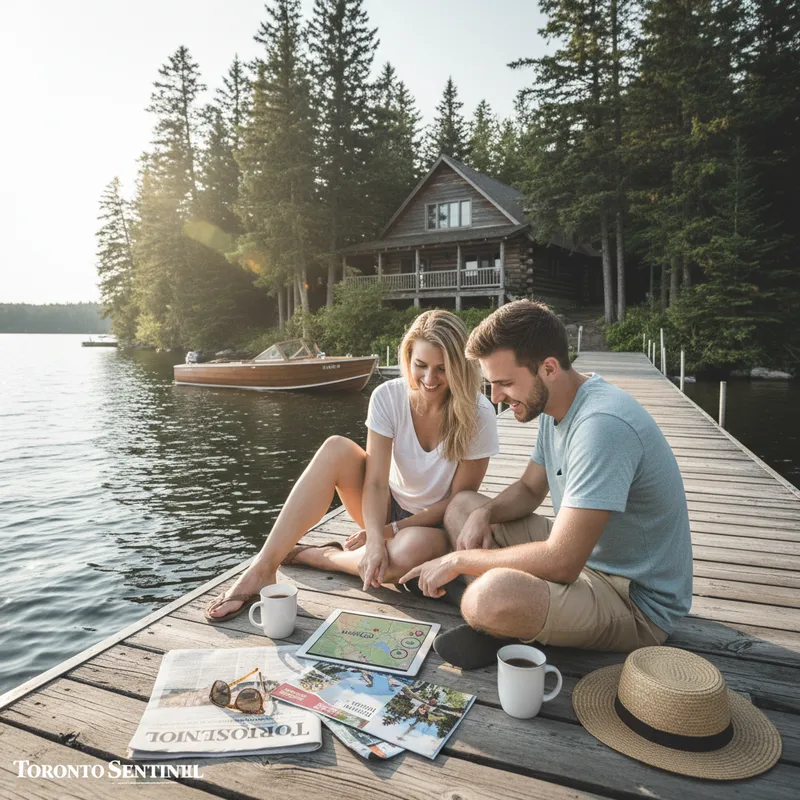
Torontonians don’t need a passport to get that classic summer reset, a dock, a book, and a late-night fire with the loons calling somewhere beyond the treeline. What you do need is a plan. For summer 2026, cottage supply near the GTA will again be tight for prime July and August weeks, and the listings that look like bargains often hide steep cleaning fees, strict noise rules, or a shoreline that is more marsh than swim spot.
This guide is built for people booking from Toronto, whether you’re trying to squeeze in a long weekend, lock down a family week, or find something pet-friendly that won’t require a second mortgage. Below you’ll find ten reliable rental destinations within a realistic drive, plus practical booking tips, budgeting guidance, and what to ask hosts so you don’t end up with a “lake view” that’s really a peek between cottages.
For context on what “cottage country” means in Ontario, Destination Canada’s primer is a solid starting point, especially if it’s your first time navigating lake life. See: Living the Ontario cottage life.
How to plan a summer 2026 cottage trip from Toronto
Start by deciding what kind of cottage trip you’re actually planning, because “anywhere on a lake” is how you end up paying Muskoka prices for a property where you can’t swim. For most GTA renters, the key choices are: drive time (90 minutes vs 3.5 hours), waterfront type (swim-friendly sandy entry vs rock shelf), and amenities that reduce packing (linens, laundry, dishwasher, A/C, reliable Wi-Fi).
Timeline for summer 2026: If you want a peak week (late June through Labour Day) on a major lake, start searching in fall 2025 and expect meaningful inventory to appear through winter 2026. For shoulder-season summer (early June, September), you can often book later and save hundreds per night.
Group planning: Before anyone sends a deposit, get alignment on non negotiables: number of bedrooms (not “sleeps 10”), pet policy, whether kids need a beach entry, and whether you want a town nearby for groceries and rainy-day activities.
Getting out of the city: If you’re leaving from midtown or the core on a Friday, build in extra buffer. Toronto’s congestion is real, and small delays snowball once you hit Highway 400 or 404. Our coverage of the city’s attempts to ease gridlock is worth a read if you’re timing a weekend escape: Toronto rolls out AI traffic lights to fight gridlock.
Where to book: Airbnb vs Vrbo vs local cottage agencies
Most Torontonians start with Airbnb or Vrbo because the maps are easy and reviews feel reassuring. They’re good for quick comparisons, but they’re not the only way to book.
Airbnb is best when you want strong review volume, clear cancellation terms, and a streamlined booking experience. Downsides can include higher service fees and the occasional listing that feels like it was optimized for photos, not comfort. Browse: Airbnb cottages in the Greater Toronto Area.
Vrbo tends to skew toward full-home rentals, often with more family oriented properties and week-long stays. It can be a good fit for traditional Saturday to Saturday cottage weeks. Browse: Vrbo Toronto area cottages.
Local cottage agencies can offer vetted homes, consistent standards, and on-the-ground support if something breaks. The tradeoff is less flexibility on short stays and sometimes higher rates. Examples include Jayne’s Cottages, which markets luxury properties across Muskoka, Lake of Bays, Lake Simcoe, and Collingwood. See: jaynescottages.com.
Specialty sites and classifieds: CottagesInCanada is a long-running Canadian marketplace that can surface owner-run rentals and quieter lakes near the GTA. Start here: Toronto area cottage rentals.
What a cottage rental really costs near Toronto
Sticker price is only part of the budget. Before booking, ask for an itemized total so you can compare apples to apples across platforms.
- Nightly or weekly rate: Peak summer waterfront can jump dramatically.
- Cleaning fee: Common on Airbnb and Vrbo.
- Service fee: Varies by platform.
- Security deposit: Often held separately by agencies or via pre-authorizations.
- Taxes: HST may apply, and some municipalities have additional short-term rental taxes.
- Extras: Firewood, propane, dock space, linens, and pet fees.
As a rough planning range for summer 2026 within a 2 to 3 hour drive of Toronto, expect budget inland cottages to start around the low hundreds per night, with prime lakefront properties and larger homes commonly reaching several hundred to well over a thousand per night during peak weeks. Luxury agencies can go higher, especially on Muskoka’s big three lakes.
Tip for families: If you’re already budgeting for kids’ summer schedules, it can help to plan the cottage week around camps or childcare. Our roundup of the city’s big options is here: The top 25 summer camps in Toronto for 2026: a parent’s guide.
What to ask before you book (so you don’t get burned)
Photos can’t tell you everything. A quick message to the host or agency can save a weekend.
- Waterfront details: Is it swimmable, weedy, shallow, rocky, or a drop-off? Is there a beach entry?
- Dock and boats: Is the dock private? Any shared shoreline? Are kayaks or canoes included, and are lifejackets provided?
- Noise and bylaws: Many areas strictly limit parties and outdoor music. Ask about quiet hours.
- Connectivity: If you need to work remotely, ask for a speed test screenshot and whether cell reception is reliable.
- Road access: Is it steep or gravel? Is winter access relevant for shoulder season?
- Water: Well water or municipal? Any known sulphur smell? Is drinking water provided?
- Bugs and safety: Screened porch, citronella, and whether there’s a known wasp issue.
If you’re planning a larger gathering, be realistic about risk. Ontario cottage communities have increasingly strict enforcement around short-term rentals, and neighbours will call bylaw if a group looks like an event. That can end a vacation fast, and it’s not worth the stress.
Best cottage rental destinations near Toronto for summer 2026
These ten destinations are popular with Torontonians for a reason: driveable distances, lots of rental inventory, and enough on-the-ground amenities to make a week away easy. Distances below are approximate from downtown Toronto and assume typical traffic. Always confirm local rules, including fire bans and boating restrictions.
Muskoka (Bracebridge, Gravenhurst, Port Carling)
If you want the iconic Ontario cottage postcard, granite, pines, and clear water, Muskoka still sets the tone. The area’s “big three” lakes, Muskoka, Rosseau, and Joseph, attract luxury travellers, but you can also find more modest cottages on smaller lakes within the district.
Why go: Big lake boating culture, dining and shopping in Port Carling, and plenty of day-trip options.
Drive time: About 2 to 2.5 hours to Gravenhurst in good traffic.
Where to browse: Jayne’s Cottages lists Muskoka properties across the major lakes, see jaynescottages.com/vacation-rentals.
On-the-ground anchor: Muskoka Steamships and Discovery Centre, 275 Steamship Bay Rd, Gravenhurst, ON. Summer hours vary, tickets typically paid. Check muskokasteamships.com.
Lake of Bays (Dorset, Baysville, Dwight)
Lake of Bays feels like Muskoka’s calmer cousin, still scenic and large, but often quieter and more family-forward. You get big-water views with slightly less bustle, and good access to Huntsville for groceries and rainy-day errands.
Why go: More relaxed pace, excellent paddling and boating, and easy access to Algonquin’s west side.
Drive time: Roughly 2.5 to 3 hours from Toronto depending on where you’re staying.
Booking tip: Ask about water depth and wind exposure. Some bays are sheltered and ideal for kids, others get choppy.
Where to browse: Jayne’s lists Lake of Bays inventory at jaynescottages.com.
Kawartha Lakes (Bobcaygeon, Fenelon Falls, Buckhorn)
The Kawarthas are the classic “close enough for a long weekend” cottage region for GTA families. You’ll find lots of choice, from rustic cabins to newer builds with A/C, and plenty of towns for ice cream runs.
Why go: Shorter drive, great fishing, and a balance of lake time and small-town wandering.
Drive time: Often 1.5 to 2 hours to the western Kawarthas.
Where to browse: Airbnb regularly features Kawartha Lakes cottages, and the “Guest favourite” filter can help narrow choices, see Airbnb.
Local note: If you need a true swim beach for kids, filter for “sandy” and confirm in writing. Many shorelines are natural and weedy in August. For those dreaming of a San Diego beach trip, check out San Diego’s best beaches for a guide to the top sandy spots.
Haliburton Highlands (Haliburton, Minden, Dorset area lakes)
For a more rugged, shield-country feel without going all the way to Algonquin’s interior, Haliburton delivers. Lakes are often clearer and more elevated, and nights cool down, even in mid-summer.
Why go: Hiking, paddling, and a “real cottage” feel with fewer tourist crowds than Muskoka.
Drive time: Typically 2.5 to 3 hours.
Best for: Groups who want outdoor days and quieter nights.
Trip-planning idea: Pair your cottage week with a day pass or short paddle route in nearby parks, but check rules and permits in advance. Ontario Parks information is here: ontarioparks.ca.
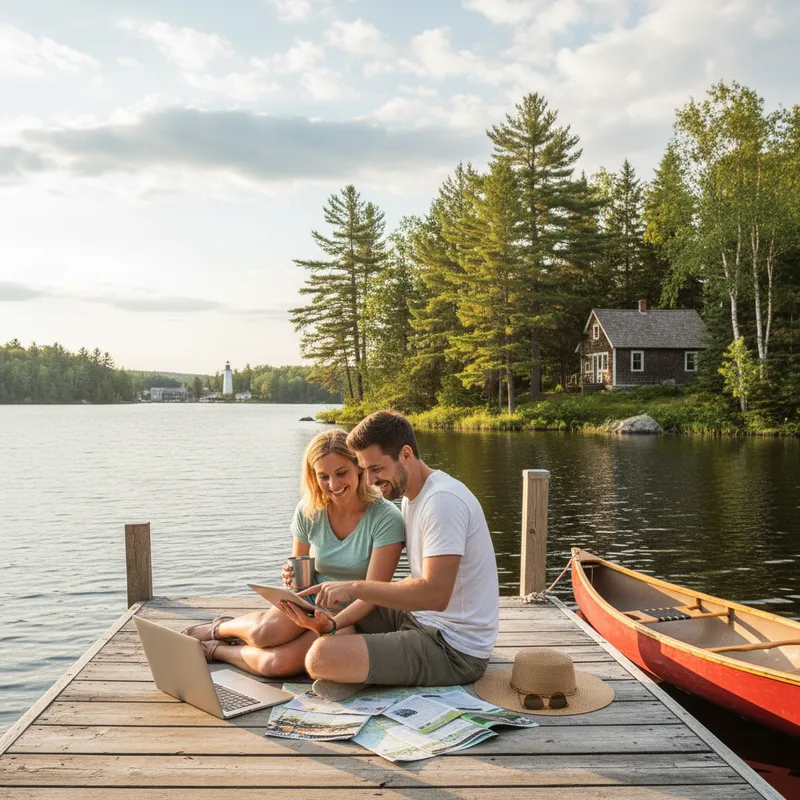
Georgian Bay and the 30,000 Islands (Midland, Penetanguishene, Honey Harbour)
Georgian Bay is dramatic, with wind-swept pines, rocky shorelines, and island-studded sunsets that feel more like the east coast than southern Ontario. It’s also where you need to be honest about your comfort level on big, changeable water.
Why go: Epic scenery, boating, and the feeling of “getting away” without a huge distance.
Drive time: About 2 to 2.5 hours to Midland area.
Booking tip: If you’re renting an island cottage, confirm boat transfer details, parking, grocery runs, and what happens if the wind picks up.
Where to browse: Cottage Vacations highlights Georgian Bay as a core region, see cottagevacations.com.
Collingwood and Blue Mountain (Collingwood, Thornbury)
Not every cottage trip has to be a dock-and-lake week. Collingwood and the Blue Mountain area are a strong pick if you want restaurants, trails, and family activities, plus the option of a short drive to beaches on Georgian Bay.
Why go: Easy active days, good food scene, and reliable amenities.
Drive time: Around 1.5 to 2 hours in good traffic.
Where to browse: Jayne’s has Collingwood and Thornbury properties, see jaynescottages.com.
Good to know: You’re paying for proximity to a resort town. If you want privacy, focus on rural listings outside the village core.
Prince Edward County (Picton, Wellington, Bloomfield)
PEC is the cottage trip for people who want beaches and wineries, plus galleries, markets, and some of the province’s best warm-weather dining. It’s also a place where summer weekends book up far in advance.
Why go: Sandbanks-style beach days, wine touring, and a very “Ontario summer” vibe.
Drive time: Around 2.5 to 3 hours from Toronto.
Price cue: Expect higher rates in July and August, especially near the water and in Wellington.
Local stay option: Wander The Resort is a well-known County accommodation listed widely, located near Bloomfield. Check availability and current rates on major booking sites or its official channels.
Park planning: If Sandbanks Provincial Park is on your list, plan ahead for day-use capacity rules and up-to-date advisories via Ontario Parks Sandbanks.
Niagara-on-the-Lake and Niagara wine country
Niagara is not cottage country in the traditional shield-lake sense, but it is a practical “cottage-style” rental region for Torontonians who want a short drive, great food, and a mix of tourist days and quiet nights in a standalone home.
Why go: Wineries, cycling, and quick access to attractions.
Drive time: About 1.5 hours, depending on traffic.
What to book: Look for carriage houses, guesthouses, and small cottages in and around NOTL, Virgil, and rural Niagara.
Where to browse: Airbnb frequently features Niagara cottages and converted carriage houses. Confirm parking and walkability if you want to skip driving after tastings.
Lake Simcoe (Innisfil, Keswick, Sutton)
Lake Simcoe is the “fastest” true lake option from Toronto, which makes it ideal for a two-night reset or a family week where you don’t want the full northbound haul. The water is broad, and some areas have sandy bottoms and long, shallow entries.
Why go: Short drive, wide-open views, and strong cottage inventory.
Drive time: Often 60 to 90 minutes.
Booking tip: Ask about shoreline type and algae conditions. Like many large lakes, conditions can vary through the summer.
Where to browse: Jayne’s lists Lake Simcoe properties at jaynescottages.com.
Thousand Islands (Gananoque, Ivy Lea)
It’s a longer drive, but the Thousand Islands can feel like a true vacation region, with river islands, historic towns, and a different kind of waterfront than you get on inland lakes. For summer 2026, this is a smart pick if you’ve already “done” Muskoka and want something new.
Why go: Big scenery, island boat tours, and excellent paddling.
Drive time: About 3.5 to 4 hours.
Good to know: Some rentals are island-access only, similar to Georgian Bay. Confirm transfer logistics.
Grand Bend and Lake Huron beaches (Grand Bend, Bayfield)
If your cottage dream is sand between your toes and sunsets that light up the whole horizon, Lake Huron delivers. Grand Bend and Bayfield are popular summer towns with lots of short-term rental options, but prices rise fast in peak weeks.
Why go: Beach days, warm-water shallows in summer, and classic summer town energy.
Drive time: About 2.5 to 3 hours.
Booking tip: Confirm whether you have private beach access, and ask about parking if the property is in town.
How to get there: driving, trains, and meeting up from Toronto
For most destinations above, driving remains the practical choice, especially if you’re hauling coolers, lifejackets, and a week’s worth of groceries. If you’re coordinating multiple households, consider meeting at a highway-adjacent grocery store in Barrie, Orillia, or Peterborough so not everyone has to navigate cottage roads separately.
Some trips can be made easier if you plan your Toronto-side transit well, especially for groups linking up from different neighbourhoods. If you’re using TTC to meet at a pickup point, the city’s long-awaited opening of the Eglinton Crosstown may shift how some families connect across town. See our coverage: Eglinton Line 5 LRT opens after years of delays.
Safety, rules, and respect in cottage country
Cottage rentals are someone’s home, and often part of a tight-knit community. The fastest way to have your stay cut short is ignoring bylaws, lighting fires during a ban, or treating a quiet bay like a festival site.
- Fire safety: Check for local fire bans before you strike a match.
- Water safety: Wear lifejackets, especially for kids and new paddlers.
- Noise: Respect quiet hours. Sound carries across water.
- Wildlife: Don’t leave garbage out overnight. Raccoons and bears are real in many areas.
And if you’re planning to disconnect, make sure at least one person in the group knows the closest urgent care, pharmacy, and the cottage’s civic address for emergency services.
For Torontonians who are also thinking about home security and surveillance tech, it’s worth remembering that many cottage rentals now have exterior cameras for driveway monitoring. Ask what’s installed, where, and confirm there are no cameras facing private areas. Our reporting on surveillance debates in the city offers a useful lens: Rosedale residents debate AI surveillance system after crime.
Cross-site reading: If you’re comparing how other cities plan summer travel and camps, this Boston guide is a helpful reference point for timelines and budgeting: Boston summer camps 2026: The ultimate guide.