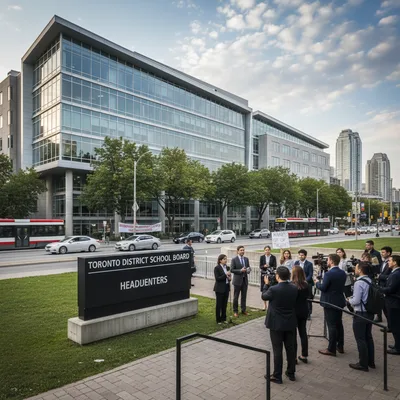
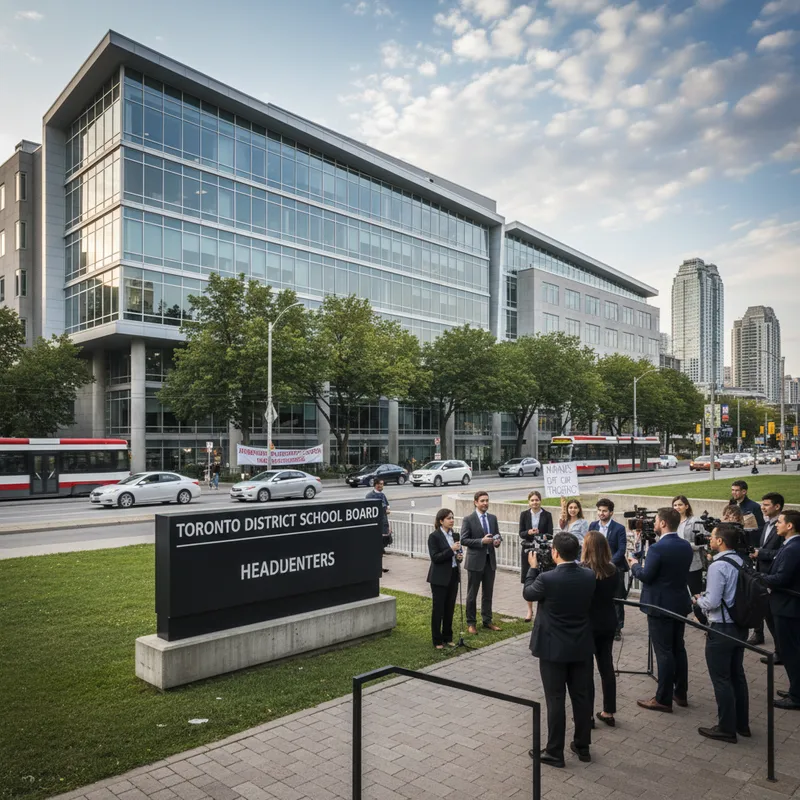
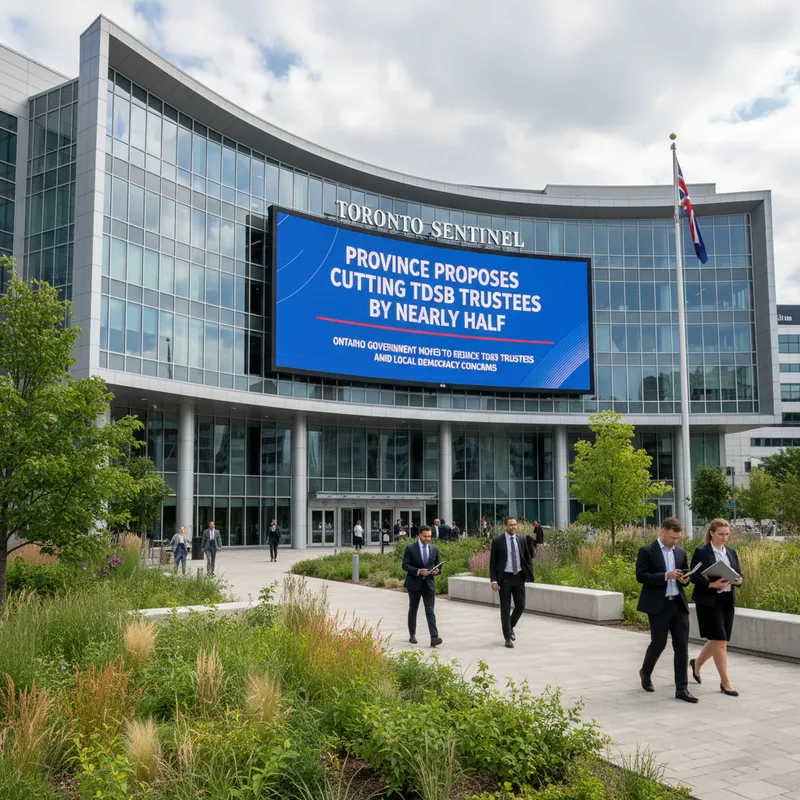
The Ontario government has sparked outrage from parents and trustees after unveiling a proposal to nearly halve the number of trustees at the Toronto District School Board (TDSB). The move, which would reduce the board from 22 trustees to 12, is part of a larger package of education reforms that the province says is aimed at creating consistency, but which critics are calling a targeted attack on Toronto’s democratic process.
The proposed legislation, introduced on Monday, would cap the number of trustees at any single school board in Ontario at 12. However, the TDSB is the only board in the province that currently exceeds this number, making it the sole institution affected by the reduction. For each of the remaining trustees, the number of schools and students they represent would nearly double, a prospect some say would make the role unmanageable and severely limit their ability to serve their communities.
At a press conference, Education Minister Paul Calandra defended the legislation as a necessary step toward improving school board operations across the province. "This legislation is an important step forward," Calandra said. "It represents a move toward greater consistency, stronger accountability and more active leadership from the Ministry of Education."
Changes would make role more difficult, trustees say
The government’s plan also involves shifting significant responsibilities away from trustees. Under the proposal, each board would hire a CEO to handle its budget and a chief education officer to oversee educational matters. Calandra stated these changes are intended to remove "the distractions that come from trustees" and allow them to focus on a more streamlined role.
However, many trustees argue that this diminishes their purpose and makes meaningful representation impossible. "I just don’t understand how we are to provide meaningful service to the public with so many schools under our purview," said TDSB trustee Alexis Dawson, who represents Davenport and Spadina-Fort York.
I think a large part of it was a big f--- you to Toronto.</blockquote>
Dan MacLean, a trustee for Etobicoke Centre, called the potential new workload "virtually impossible." He currently represents 29 schools, a number he projects could climb as high as 60 if the changes are passed. This expansion, he argued, would make it incredibly difficult to maintain relationships with parents and understand the unique issues facing each school community.
Fears of diminished parental influence
Parent advocates share these concerns, fearing the move will silence their voices within the education system. Katrina Matheson, co-chair of the TDSB’s parent involvement advisory committee (PIAC), expressed worries that trustees would be reduced to "ministry scapegoats," tasked with implementing policies they had no hand in creating. Speaking from her personal perspective, she said the changes would severely limit the ability of parents to shape their children’s schools through their elected representatives.
For some, the proposal echoes a previous controversial decision by Premier Doug Ford’s government. In 2018, the province slashed the number of Toronto city council seats from 47 to 25 just before the municipal election. Similar issues have surfaced in the US, where the Education Department faces continued dismantling, with new office closures. Sara Blumenstein, a TDSB parent and administrator of the Toronto Education Advocacy Network, said the plan highlights the provincial government’s "obsession" with Toronto’s affairs.
"[It] does not lead to smaller class sizes, better supports for students or more funding in our schools,” Blumenstein said. “What we’re getting is rigidity.” The governance changes come as other public bodies, like the police in Revesby, Australia, are seeing significant investment in local infrastructure, raising questions about provincial priorities.
Concerns grow over trustee remuneration and diversity
Compounding the issue is a separate proposal to cap trustee honoraria at $10,000 annually, a significant cut from the roughly $25,000 TDSB trustees currently receive. Blumenstein warned this would create barriers for many potential candidates, particularly working mothers and those from lower-income backgrounds, leading to less socio-economic diversity on the board.
Critics have pointed out an apparent contradiction in the province’s approach to compensation. While trustee pay is being cut, provincially-appointed supervisors, who have been placed in charge of several boards including the TDSB, are permitted to bill up to $1,000 per half-day, with an annual maximum of $350,000, according to a Global News report. The proposed legislation does not include any changes to this arrangement.
The history of strained relationships on school boards is well-documented. Past controversies, such as when a York Region trustee faced calls for resignation over using a racial slur in 2017, have fueled a perception of dysfunction that the government may be seeking to address. These incidents highlight the intense scrutiny and public pressure inherent in the role, which some observers believe the new changes fail to adequately consider.
Some trustees see potential benefits
Not all reaction to the proposal has been negative. Etobicoke-Lakeshore trustee Patrick Nunziata said he felt torn, admitting he "can’t pretend I won’t see some relief seeing the old dynamic reset." He noted that at times, trustee work "drifted into personal agendas and side issues, and it took focus away from students."
Despite this, Nunziata shared deep reservations about the consequences of larger wards. "I genuinely don’t know how you maintain meaningful, diverse representation under those conditions," he said. He suggested the position could become less a form of public service and "more like either a political stepping stone, or a volunteer position for retired folks or people who simply have too much time on their hands."
Future uncertain as fall elections loom
Municipal and school board elections are scheduled to proceed this fall, but significant uncertainty remains. TDSB spokesperson Ryan Bird confirmed that the board must now develop a plan for new ward boundaries, which has yet to be approved. Many current trustees have not yet decided if they will seek re-election under the proposed new system.
Meanwhile, the province has signalled its intention to maintain a strong hand in board affairs. Minister Calandra stated that provincially-appointed supervisors will remain at several boards, including the TDSB, "for as long as it takes to put them back on the right track," regardless of the upcoming election results. This commitment to continued oversight suggests that even after voters cast their ballots, Queen s Park will be watching closely.