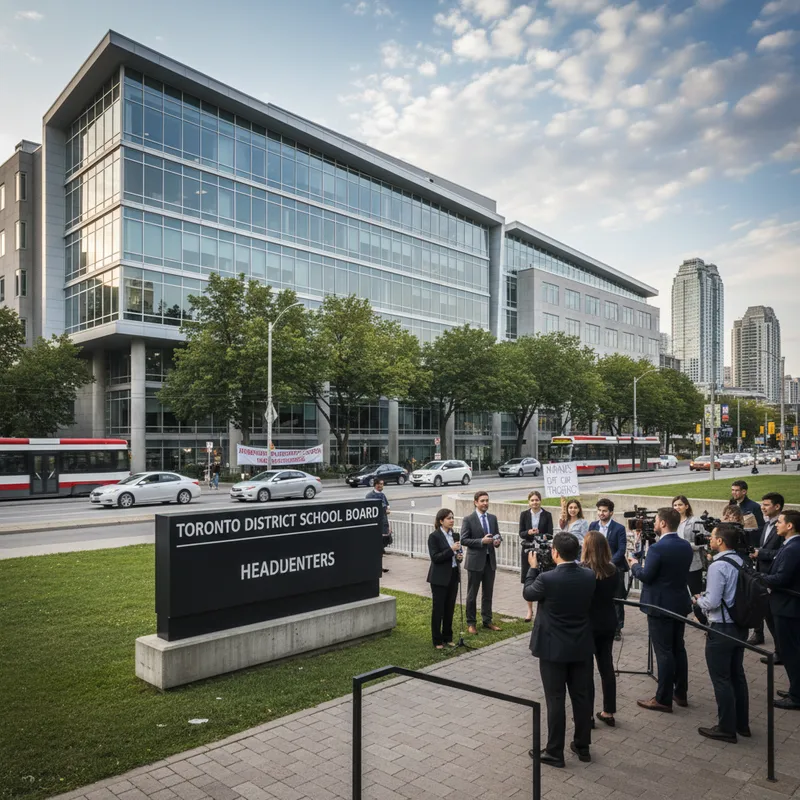
The Ontario government has unveiled a controversial proposal to nearly halve the number of trustees at the Toronto District School Board (TDSB), a move that critics are blasting as an undemocratic power grab that specifically targets the city and undermines local representation.
Introduced Monday as part of a wide-ranging package of education reforms, the legislation would cap the number of trustees at any single school board in the province at 12. However, the TDSB is the only board in Ontario that currently exceeds this number, meaning the proposed change would exclusively affect Toronto. The number of trustees would be cut from 22 down to just 12.
The change would dramatically increase the size of trustee wards, with each elected official representing a much larger number of schools and families. The proposal has ignited fierce opposition from current trustees, parents, and community advocates, who argue it will make it substantially harder for their voices to be heard on educational matters.
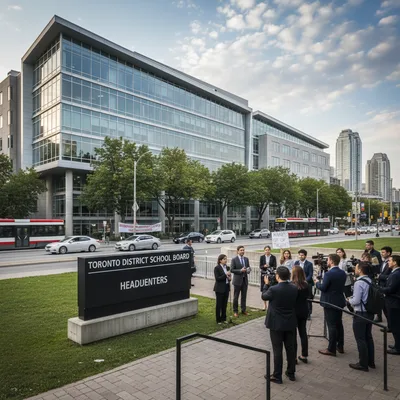
At a press conference, Education Minister Paul Calandra framed the legislation as a necessary step toward standardizing governance across the province. "This legislation is an important step forward," he said. "It represents a move toward greater consistency, stronger accountability and more active leadership from the Ministry of Education."
Concerns over representation and workload
Many trustees believe the expanded responsibilities would make the role unmanageable. Dan MacLean, a current TDSB trustee for Etobicoke Centre, said the job would become "virtually impossible." He noted that he presently represents 29 schools, a number he projects could swell to as many as 60 if the changes are enacted. This, he argues, would make it exceedingly difficult to build relationships and adequately address the specific needs and issues within each school community.
TDSB trustee Alexis Dawson, representing Davenport and Spadina-Fort York, was more blunt in her assessment. “I think a large part of it was a big f--- you to Toronto,” she stated, questioning how trustees could possibly offer meaningful public service with such an expanded portfolio.
I just don’t understand how we are to provide meaningful service to the public with so many schools under our purview.
The provincial government argues that the role of trustees is set to shrink. Minister Calandra’s plan also involves creating two new non-elected positions at each board: a chief executive officer to handle budgets and a chief education officer to oversee pedagogy. "I wanted to ensure that we removed the distractions that come from trustees," Calandra explained, adding their duties will be "significantly reduced."
Echoes of past political battles
This move is being viewed by many as a direct parallel to Premier Doug Ford’s contentious decision in 2018 to drastically cut the size of Toronto City Council from 47 to 25 seats just before the municipal election. That decision also sparked accusations of political interference and a disregard for local democracy in Ontario’s capital.
Sara Blumenstein, a TDSB parent and an administrator of the Toronto Education Advocacy Network, said the proposal reveals the provincial government’s “obsession” with meddling in Toronto’s affairs. She argued the changes do nothing to address the real issues facing students. “It does not lead to smaller class sizes, better supports for students or more funding in our schools,” she said. “What we’re getting is rigidity.”
Katrina Matheson, co-chair of the TDSB’s parent involvement advisory committee (PIAC), speaking from her personal perspective, echoed these concerns. She fears the changes will strip trustees of their ability to shape school budgets and policy, reducing them to mere "ministry scapegoats" tasked with implementing directives from above rather than representing their constituents' vision.
Financial implications and trustee diversity
Furthering concerns about the future of the trustee role is a proposed significant cut to their pay. According to Dawson, TDSB trustees have typically received about $25,000 annually. The new legislation would cap the honorarium at $10,000 per year for all trustees in Ontario. This has led to worries that the role will become inaccessible to many, shrinking the pool of potential candidates.
Blumenstein suggested this change would limit the socio-economic diversity of the board, making it difficult for working parents or those with lower incomes to consider running. Trustee Patrick Nunziata (Etobicoke-Lakeshore) shared a similar sentiment, worrying the position could become a "political stepping stone, or a volunteer position for retired folks or people who simply have too much time on their hands."
While trustee compensation is being cut, the pay for provincially-appointed supervisors, who oversee some boards including the TDSB, remains untouched. According to a Global News report, these supervisors can bill their respective boards up to $1,000 per half-day, with an annual cap of $350,000. The proposed legislation makes no mention of reducing this amount.
An uncertain future
Despite the proposed overhaul, trustee elections are expected to proceed this fall alongside municipal elections. However, significant uncertainty remains, particularly regarding the new ward boundaries, which have not yet been drawn. TDSB spokesperson Ryan Bird confirmed this information is not yet available and that staff must first develop and approve a plan.
While some trustees, like Nunziata, see a potential upside in resetting a board dynamic that sometimes "drifted into personal agendas and side issues," he maintained that he "wouldn’t wish the job on anyone" under the proposed larger ward structure. “I genuinely don’t know how you maintain meaningful, diverse representation under those conditions,” he stated.
The changes come at a time when the province has taken other significant steps to alter the education landscape, including shortening the length of teacher education programs to address staffing shortages. Meanwhile, Toronto is also experimenting with other civic changes, such as a proposed pedestrian-only pilot on Church Street this summer. Minister Calandra has confirmed that provincially appointed supervisors will remain in their positions "for as long as it takes to put them back on the right track," ensuring that even after the fall elections, ministry oversight will continue for the foreseeable future.