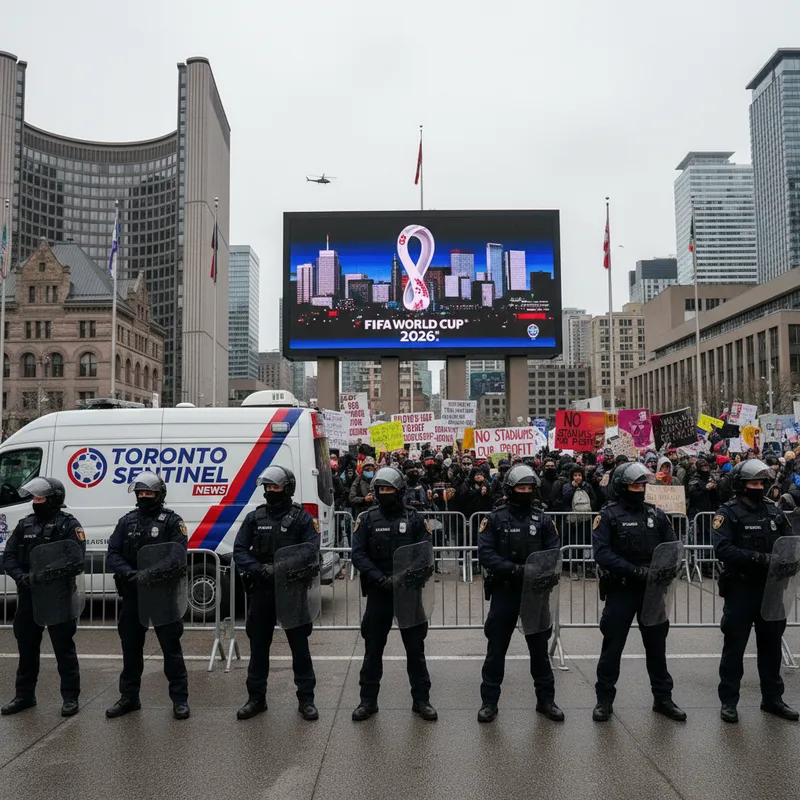
With the 2026 FIFA World Cup now less than two months away, the Toronto Police Service has revealed its comprehensive security strategy for the global tournament, detailing plans for a massive, multi-agency operation and preparations for a likely increase in protests.
The plan was presented to the police services board on Monday, outlining the security framework for the six matches Toronto will host. The operation has been in development for over three and a half years and will involve a coordinated effort between Toronto police and officers from the RCMP, Ontario Provincial Police, and regional forces from Durham, York, and Peel.
“This team has been at this for the past three and half years,” said Toronto police Insp. Barry O’Neill on Monday. “In preparation for the world's largest event coming to the City of Toronto.”
The city's police service, which has a budget of over $1.1 billion, is mobilizing numerous specialized units. The operation will see police dogs sweeping venues, mounted units for crowd management, and an increased presence from the marine unit on the waterfront. The high-risk emergency task force and the explosive disposal unit will also be stationed at key locations.
Multi-agency force to secure four key sites
The security plan focuses on four primary locations across the city. The main venues are Toronto Stadium, the temporary name for BMO Field during the tournament, and an adjacent fan festival at Fort York. Together, these waterfront sites are expected to draw 65,000 people for each of the six games.
Beyond the downtown core, security will also be concentrated at two key practice facilities. Team Canada will be using Downsview Park in North York, while some visiting international teams will be based at Centennial Park in Etobicoke. This distributed footprint requires a significant and coordinated deployment of resources across Toronto. The extensive police presence comes as the service continues to evolve its public safety strategies. Earlier this year, the Toronto Police Service announced the creation of a new Counter-Terrorism Security Unit, intended to enhance readiness for major events and high-risk situations. This unit will be part of the complex security web designed to protect players, residents, and the hundreds of thousands of visitors expected, amid growing discussions about autonomous vehicles in public spaces, such as the doubts surrounding Waymo's robo-taxi tests.
Police anticipate an increase in protests
While hooliganism often associated with club football is not a primary concern for the World Cup, police are specifically preparing for a surge in demonstrations. Officials believe the tournament’s immense international media coverage makes it a prime target for protest groups seeking a global platform.
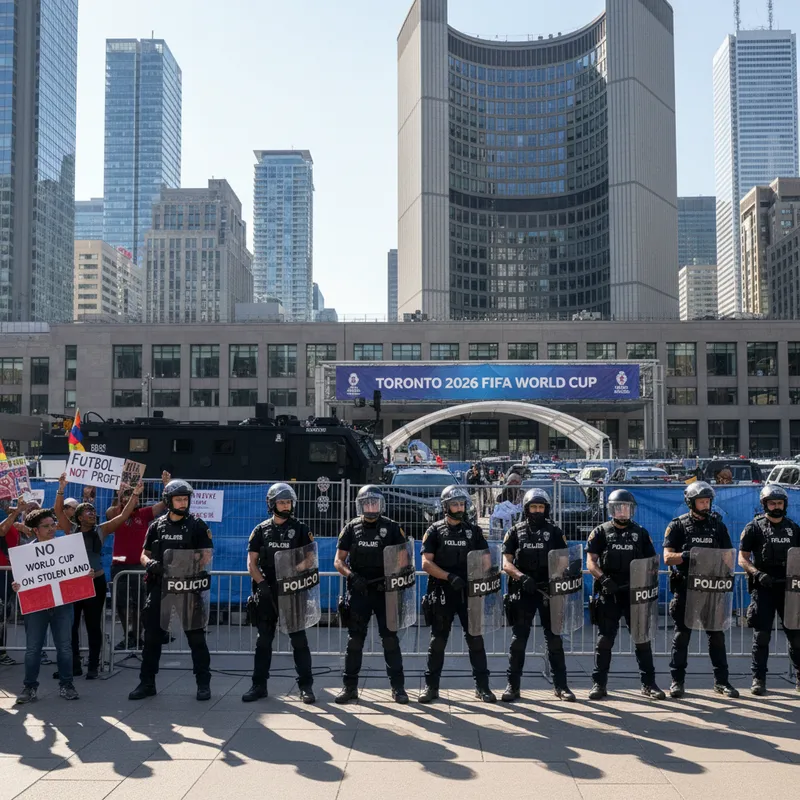
We will see an uptick most likely in protests and demonstrations. The reason for that is just the global media presence.
Insp. O’Neill noted that the last World Cup reached a global audience in the billions, providing a powerful incentive for activists to leverage the event. Major international sporting events have historically served as stages for protests on issues ranging from human rights to environmental concerns, and Toronto authorities are planning accordingly.
City prepares for massive influx of international fans
Adding to the complexity, police say that information from FIFA suggests approximately 70 per cent of match ticket holders will be international travellers. This demographic has its own unique implications for crowd and traffic management.
“A lot of these fans are coming from countries where they’re very used to walking,” O’Neill explained, indicating that authorities are preparing for large-scale pedestrian movements that may necessitate impromptu road closures to ensure safety.
The city released a broad mobility plan in late March, but specific road closure details have not yet been announced. At the board meeting, Coun. Shelley Carroll, who chairs the police board, expressed concern about the need for proactive communication. She pointed to the Paris 2024 Olympic Games, where organizers began publicizing road closures in April for the July event.
“I worry that the Toronto Police Service will be held accountable, but it’s a bigger community information piece,” Carroll said, emphasizing the need for a city-wide communication strategy to inform residents and visitors of the extensive transportation changes. The city has recently explored expanding pedestrian-only zones, such as the proposed pilot project on Church Street, which could provide a model for managing the World Cup crowds.
Live exercises to simulate match-day conditions
Before the tournament kicks off in June, police will conduct several large-scale exercises to test their readiness. A “mass casualty exercise” is scheduled for Wednesday in collaboration with local hospitals. This will be followed by a full-scale simulation of match-day operations on May 9, when global superstar Lionel Messi and Inter Miami visit to play Toronto FC.
Beyond crowd control and protests, the police presentation highlighted preparations for other potential criminal activity. The service noted that human trafficking statistically increases in cities hosting major international events, and proactive measures are being put in place. Authorities are also working on a public education campaign to combat ticket fraud for the highly coveted matches, a problem O’Neill compared to the recent challenges seen with Taylor Swift concert tickets.
With preparations entering their final phase, all levels of law enforcement are focused on ensuring the tournament is safe and successful. The coming weeks will see these plans put to the test as the city prepares to welcome the world.