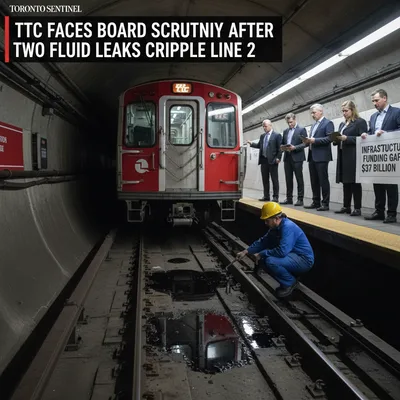
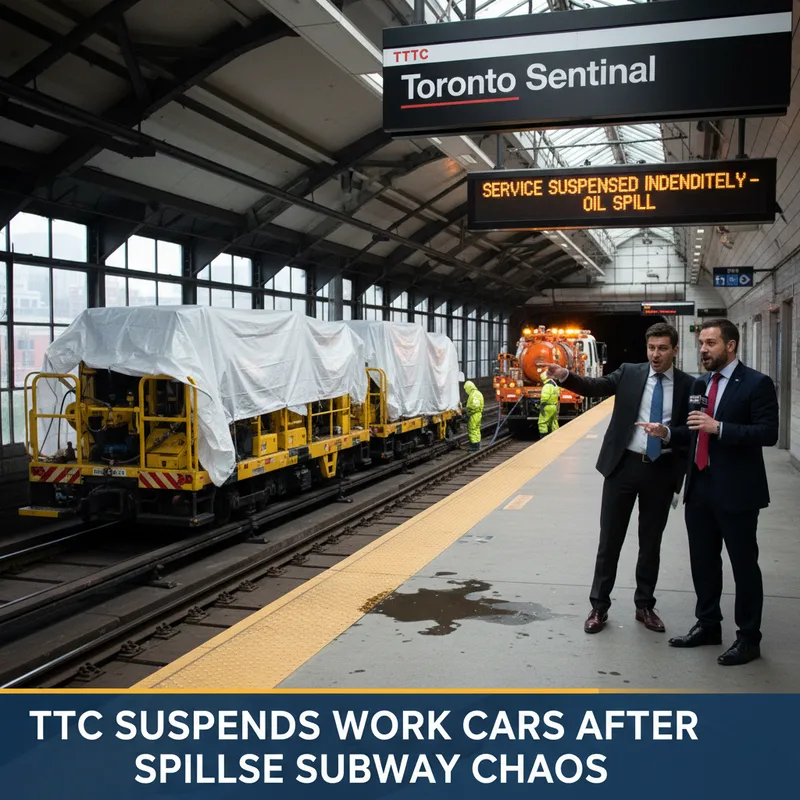
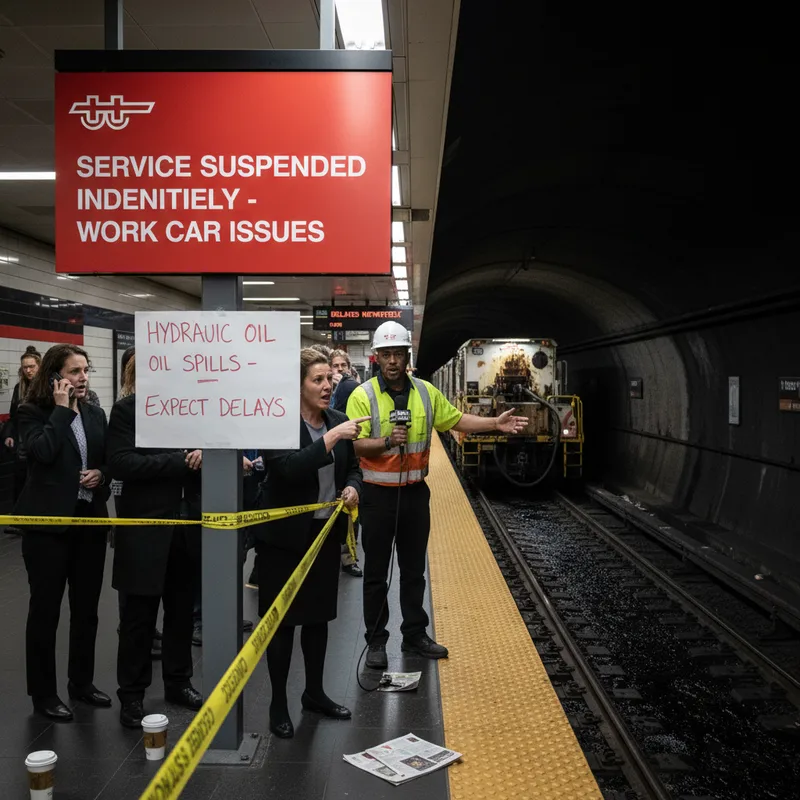
A pair of disruptive hydraulic oil spills on the TTC subway system this week has forced the agency to suspend its entire fleet of maintenance work cars, prompting questions about the effectiveness of its repair protocols and the persistent risk of future meltdowns.
Commuters faced major delays during Friday's morning rush hour after a leak from a work car shut down Line 2 service between Ossington and Woodbine stations. Service resumed just before 7:30 a.m., but it was the second time in a week that a spill had crippled the system. A similar incident on Tuesday halted trains for hours between Keele and Kipling stations.
These incidents are part of an alarming trend for the transit agency. Between 2019 and 2023, only four such leaks were reported. That number has skyrocketed to 21 spills between January 2024 and February 2026, leaking over 800 litres of hydraulic fluid onto the tracks. According to a recent TTC report, eight of those 21 leaks caused direct service delays.
The problem reached a boiling point in May 2024, when a massive spill forced a 12-hour shutdown between St. George and Broadview stations. In response, the TTC commissioned reviews from engineering firm Hatch and the American Public Transit Association (APTA) to diagnose the problem.
Maintenance plans years from completion
The independent audits, delivered in late 2024, painted a grim picture of an aging work car fleet suffering from a "lack of maintenance, undocumented repair histories and inadequate inspection routines," according to the findings. The auditors jointly made 27 recommendations, leading TTC management to create 35 action plans to address the shortfalls.
In a March 2026 update, the TTC’s audit and risk management committee said 21 of those plans were complete, with another eight expected to be resolved before the FIFA World Cup in June. The remaining six were described as underway or having temporary workarounds.
However, some of the most critical long-term fixes remain years from completion or are unfunded. A plan to improve the efficiency of cleaning up spills is not expected to be fully implemented until the third quarter of 2026. More significantly, a comprehensive plan to develop new, vehicle-specific maintenance procedures for the TTC's 77 different work cars won't be finished until 2029.
Furthermore, an APTA recommendation to have additional staff on standby to fix broken-down work cars on the mainline was not approved. The TTC’s request for the necessary funds in the 2026 budget was “not supported,” according to the March update.
A system under pressure
While some new funding has been allocated, its immediate impact is unclear. The 2025 operating budget included $1 million to hire 12 new staff for preventative maintenance, and the 2026 budget added nine more positions for "workcar and crane operation." The commission's 2026-2035 capital budget also allocates nearly $63 million for new vehicles and $35 million for overhauls. Despite these investments, the recurring spills suggest deeper, systemic issues within the TTC’s maintenance culture, a challenge that affects everything from daily operations to the delayed opening of major projects like the Eglinton Line 5 LRT. Similar issues have surfaced in Auckland, where travel faces disruption due to Cyclone Vaianu.
In a statement on Friday, TTC CEO Mandeep Lali announced a new review into the latest incidents and the suspension of the work car fleet for all but "exceptional circumstances."
'Totally unacceptable' spills draw criticism
The back-to-back failures drew sharp rebukes from city councillors and transit advocates. TTC board chair Jamaal Myers called the situation "totally unacceptable" and apologized to riders.
The TTC has made significant improvements to inspection and maintenance protocols since 2024, which makes these two recent hydraulic oil spills all the more frustrating. Our customers deserve answers, and we will provide them.
Andrew Pulsifer, head of the advocacy group TTCriders, said the suspension of work cars creates a new dilemma. The vehicles are essential for overnight maintenance on the system's aging tracks, which has already led to more frequent evening and weekend closures.
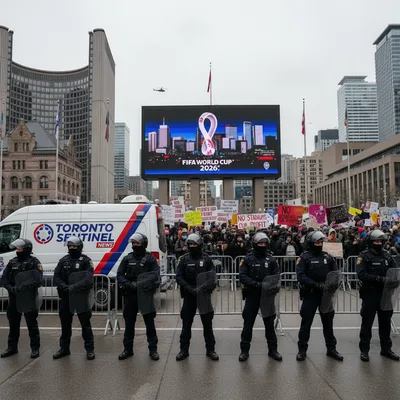
"Riders are incredibly frustrated with these kinds of delays," Pulsifer said. "We have FIFA coming up, so we can't have this kind of thing happen when hundreds of thousands of people are coming to our city and going to be taking our transit.”
The city is attempting to tackle its infrastructure challenges on multiple fronts, including the recent rollout of AI-powered traffic lights to ease gridlock, but the transit system remains a critical weak point.
Coun. Josh Matlow of Toronto-St. Paul’s, another TTC board member, expressed frustration that previous investigations have failed to prevent more spills. He stressed the impact on residents who depend on the TTC for work, school, and appointments.
"Investigations have already occurred, yet the problems persist. This cannot be allowed to continue," Matlow said. "I’ll be asking questions and demanding transparency, accountability, and most importantly action, to prevent this from happening again at the next TTC board meeting."