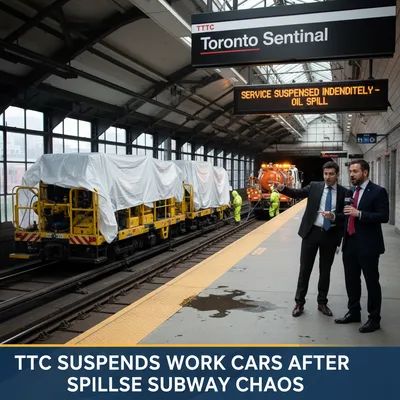
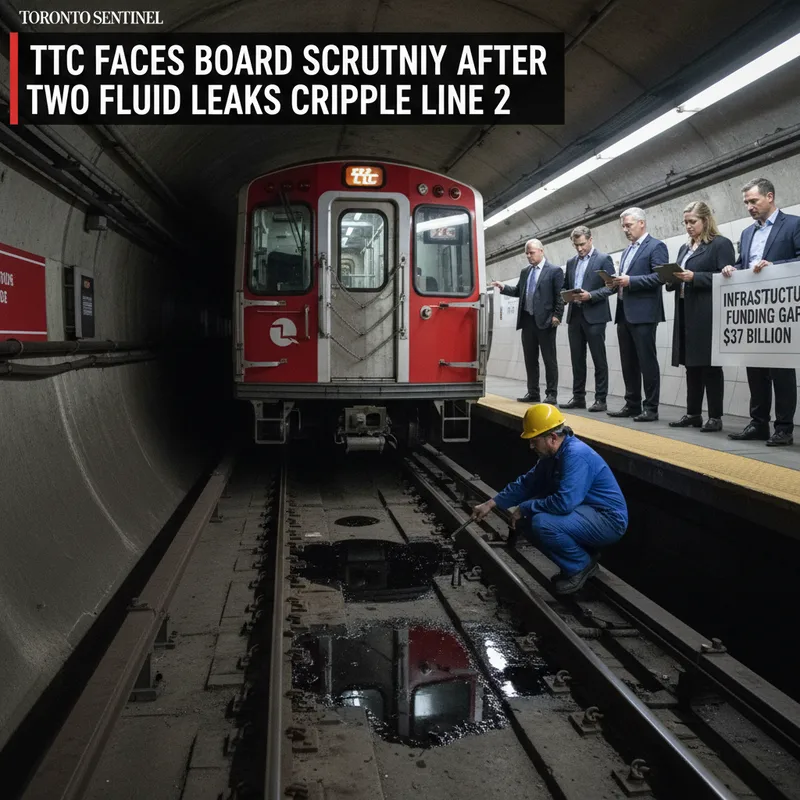
Commuter chaos from two recent hydraulic fluid leaks on the Bloor-Danforth subway line has put transit reliability in the spotlight, with the TTC board set to receive a detailed report on the disruptive incidents at a public meeting Thursday. The back-to-back failures, which occurred just three days apart earlier this month, caused significant delays and forced thousands of passengers onto shuttle buses.
The board heard that the first leak on April 7 involved 200 litres of hydraulic fluid spilling onto the tracks. The second incident on April 10 was smaller, with less than 10 litres spilled, but still caused significant service interruptions.
Investigation points to assembly errors
A third-party investigation conducted for the TTC determined the two leaks were random and could not have been predicted. The report suggested such incidents are not out of the ordinary for a transit system of Toronto's size.
The "catastrophic failure" on April 7 was attributed to a high-pressure hydrostatic fitting that was incorrectly assembled. According to the investigation, three of the four mounting bolts had not been properly torqued, leading to wear on an O-ring which eventually gave way.
The second leak was the result of a faulty part supplied by a manufacturer. The investigation found a flow control valve had an exposed O-ring, which was also the result of being under-torqued during its initial assembly.
TTC CEO Mandeep Lali addressed the board, stating that the transit authority is working closely with the part manufacturer and the third-party investigator to refine its own maintenance protocols. He acknowledged the public frustration and the recurring nature of the problem.
It’s not lost on me that this is the second time this incident has come to the board. The actions that are being taken now …are unprecedented with respect to understanding better, on the news cars and some of the old cars, how we maintain them based on the challenges and pressures they face.
A pattern of disruptions
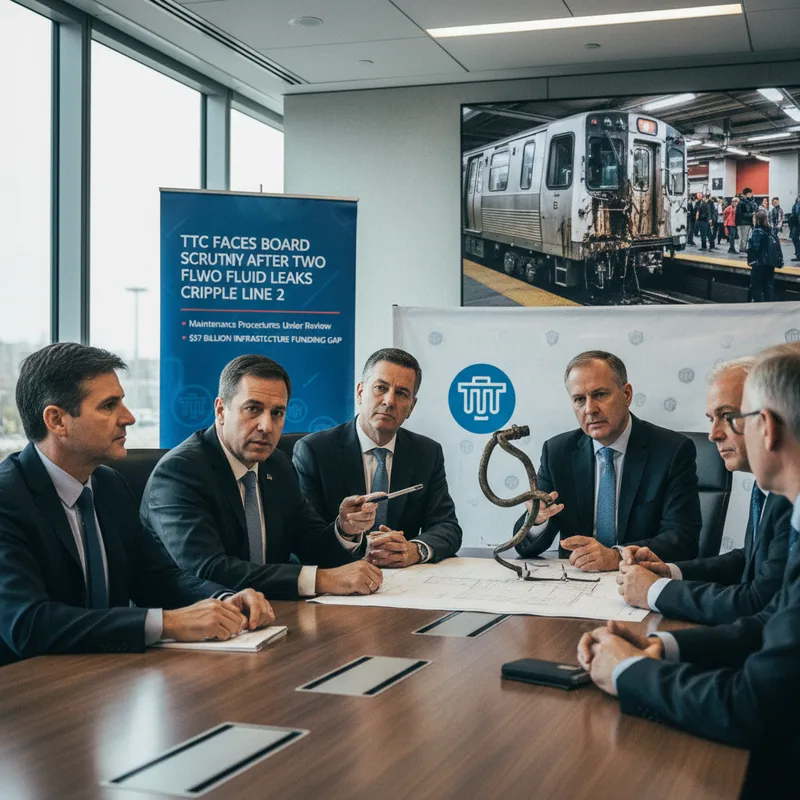
Despite the investigation's conclusion that the leaks were random, some city officials argue they are part of a troubling pattern. Councillor Josh Matlow called the repeated disruptions "unacceptable," pointing to a history of similar incidents.
“This has been going on since 2024. There have been over 21 leaks that have disrupted people’s lives, and I don’t want to see that happen again," Matlow said before the board meeting. "It’s not good enough for the TTC to say they will do something about it."
Matlow is calling for the board to mandate a clear action plan to specifically reduce infrastructure-related service disruptions, demanding the full implementation of existing recommendations that he claims have not yet been acted upon. The councillor's comments underscore a growing tension between a public demanding reliability and a transit system struggling to keep its aging components in a state of good repair.
The impact of these failures extends beyond simple inconvenience. For a city that relies heavily on its transit network, such disruptions have economic consequences, affect personal appointments, and erode public confidence in the system, potentially pushing more people towards private vehicles and worsening Toronto's notorious traffic congestion.
Decades of underfunding a core issue
Matlow and other critics argue that the spate of recent equipment failures points to a much larger, systemic problem: chronic underinvestment in the TTC's infrastructure. For years, the commission has warned of a growing backlog of essential capital repairs and upgrades needed to maintain the system.
The TTC, which celebrated its 100th anniversary in 2021, has long been an essential part of Toronto's growth. It evolved from a fragmented system of private streetcars into an integrated network of subways, buses, and streetcars. However, much of that core infrastructure is now decades old and requires immense, ongoing investment to remain safe and reliable. Currently, the TTC’s total unfunded needs are estimated to be a staggering $37 billion. While the city's 2026 budget included a modest tax hike, the funds allocated for transit fall far short of what is required to address this massive capital deficit. In NSW, Australia, the government signed a $1.9b renewable deal for public transport, highlighting different approaches to transit funding. This funding gap means that many long-term projects, from signal system upgrades to vehicle replacements, remain on the back burner.
This situation contrasts with cities like Boston, which is exploring innovative infrastructure projects to build for the future, while Toronto struggles to maintain its existing assets. The challenge is not unique to Toronto, as transit agencies across North America grapple with aging systems, but the scale of the TTC's funding shortfall is particularly acute. More information on the TTC's long-term plans can be found in its Corporate Plan.
As the TTC focuses on immediate corrective actions with its parts suppliers and maintenance teams, the broader question of a sustainable, long-term funding model remains unanswered. Matlow insists that without a serious commitment from all levels of government to address the $37 billion infrastructure deficit, Toronto's commuters can likely expect more "unacceptable" delays to become the new normal.