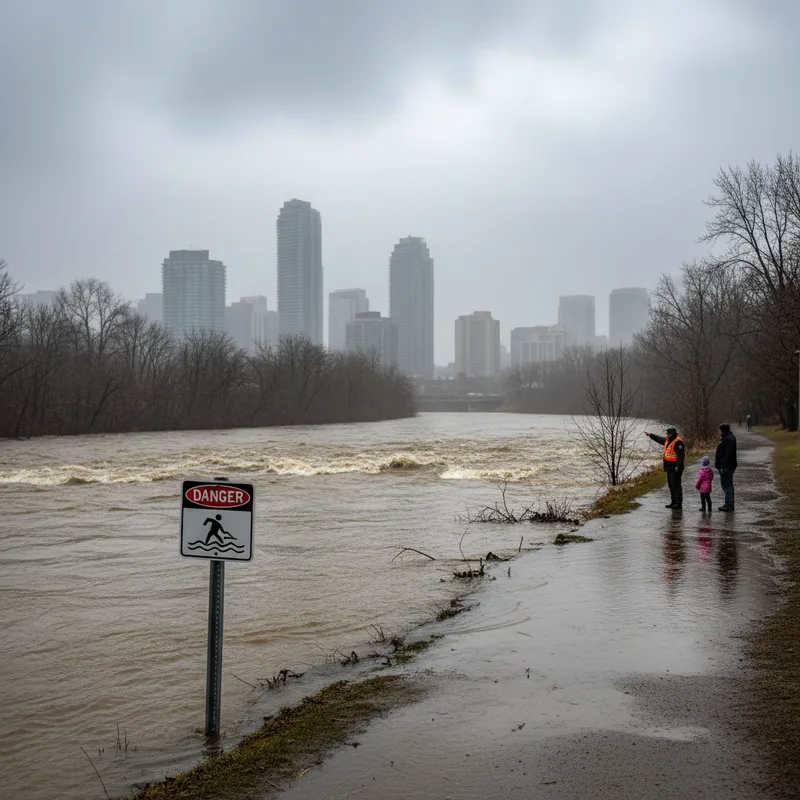
Rain in Toronto has prompted a water safety advisory from the region’s conservation authority.
The Toronto and Region Conservation Authority says rising river levels can create dangerous conditions near banks and shorelines across the Greater Toronto Area.
Why toronto has a water safety advisory today
The TRCA issued the advisory Thursday morning as rainfall combined with warmer temperatures and melting snow. The agency warned that the mix could push water levels higher in GTA rivers.
Flooding is not expected, the TRCA said. The advisory still asks residents to use caution and stay away from fast-moving water.
Even without flooding, higher flows can undercut banks and turn trails into slick, unstable ground. That is when people and pets can get pulled in, even close to shore.
What the TRCA is warning residents to avoid
The advisory is aimed at anyone who spends time along rivers, creeks, and waterfront edges, including trail users and dog walkers. The TRCA is urging residents to keep a safe distance from water and to travel with caution.
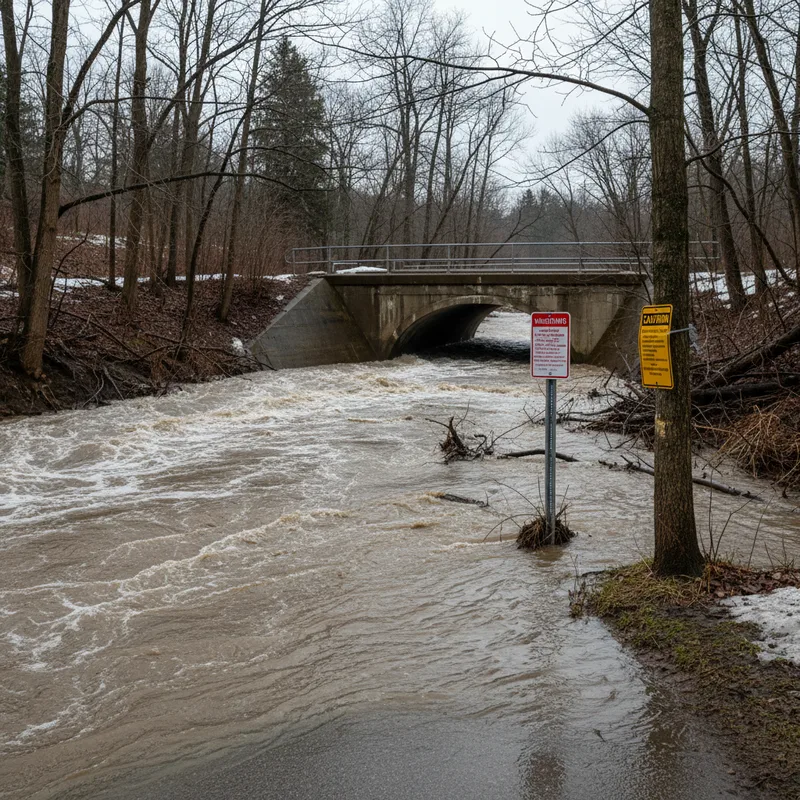
The risk climbs quickly around bends, culverts, and low bridges where currents speed up. Steep ravines can also leave few exit points if someone slips.
Safety alerts like this arrive as Toronto continues to debate how it manages shared outdoor space, from wildlife to waterways. A recent case in which a coyote killed a pet has kept attention on hazards in parks and ravines, including along trail networks near water. Related coverage: coyote kills French.
How much rain is expected and when it ends
Environment Canada forecast the rain in Toronto to end this afternoon. Weather radar showed the system moving east toward New York.
Residents tracking conditions can check official forecasts and statements through Environment Canada. The federal site posts updates on precipitation, temperatures, and special weather statements.
For people moving around the city during wet weather, the timing matters. A few hours of steady rain on thawing ground can swell smaller creeks first, then feed into larger channels later in the day.
Which parts of ontario are still under advisories
The Toronto advisory comes after a major storm earlier this month triggered flood warnings across southern and central Ontario. Most of those warnings have since been downgraded to water safety advisories.
At least 14 conservation authorities from Ottawa to Sarnia still had water safety advisories in effect Thursday. That footprint includes watersheds that drain into Lake Ontario as well as inland rivers that can rise quickly during thaws.
The TRCA’s message aligns with what other conservation authorities typically stress during shoulder-season weather. Fast water, cold water temperatures, and unstable banks can pose a hazard even when floodplains stay dry.
What to do if you live near a river in the GTA
People who back onto ravines or live near flood-prone creeks should watch for changing conditions through the day. Look for debris moving quickly, water that turns brown, or ice chunks shifting, all signs flows are rising.
If you use trails near the Don, Humber, or Etobicoke Creek, plan for detours. Low-lying sections can pool water and hide drop-offs at the edge of the path.
Parents are often balancing outdoor time with safety during spring break and early spring warmups. The city’s ravine system can look calm from a path, then surge near a pinch point downstream. For families looking for indoor options when conditions turn, see our guide to March Break 2026.
TRCA said: “Toronto residents are being warned to stay away from waterways and travel with caution as rain falls in the Greater Toronto Area, raising the risk of hazardous conditions.”
That warning focuses on behaviour, not property damage. In past events, emergency crews have responded to people swept off rocks, cyclists trying to cross flooded trail dips, and dogs that jump in and cannot return against the current.
The TRCA also flagged the role of snowmelt. A warm spell can drain snowpacks into ravines even after rainfall tapers off, meaning water levels can stay high into the evening.
Toronto residents are being warned to stay away from waterways and travel with caution as rain falls in the Greater Toronto Area, raising the risk of hazardous conditions.
City crews and conservation staff typically monitor problem spots during these advisories, including trail underpasses and crossings that collect debris. Residents can help by reporting blocked culverts and downed branches before water backs up.
For Toronto’s longer-term planning, water safety advisories offer a snapshot of how quickly conditions can change in dense urban watersheds. Research and policy debates about resilience often focus on drainage and stormwater, but everyday safety along ravines matters too. A recent look at pandemic modelling in New Zealand also underscores how agencies use early warnings to shape behaviour under uncertainty. See: new pandemic modelling.
Environment Canada expected the rain to end this afternoon, with the system tracking east. TRCA advisories are typically reassessed as river gauges and forecasts update through the day.