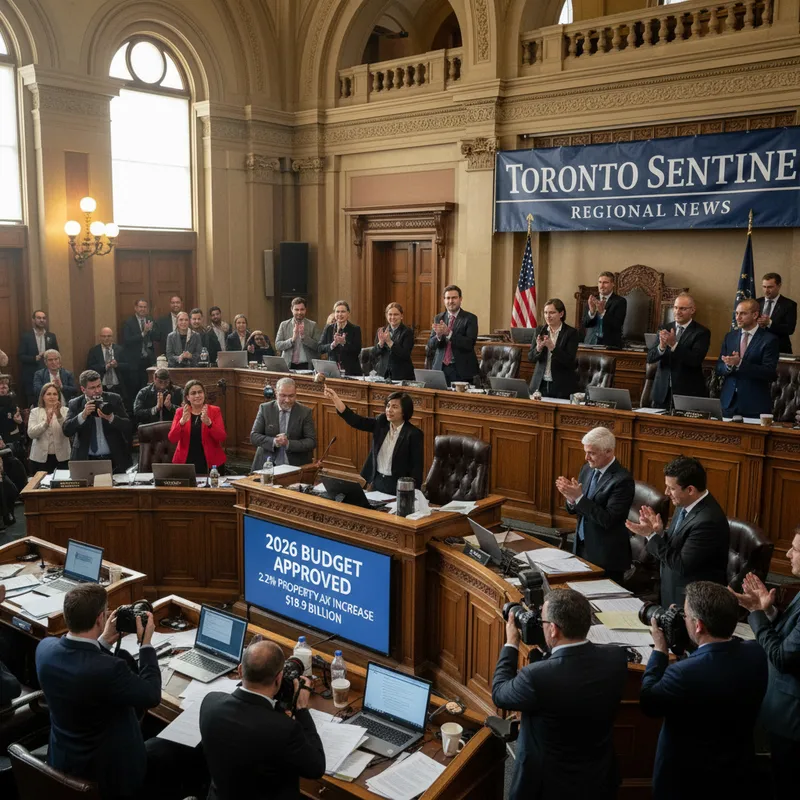
Toronto City Council has unanimously approved Mayor Olivia Chow’s $18.9 billion operating budget for 2026, a plan the mayor says is focused on improving affordability for residents. The budget, which passed with amendments on Tuesday after a special meeting at City Hall, includes a 2.2 per cent property tax increase, the lowest hike during Chow’s term in office.
The budget also features significant funding increases for the TTC and the Toronto Police Service. "My 2026 budget is focused on one thing, making your life more affordable," Chow said at a news conference last week. She framed the budget as a step toward making Toronto "more affordable, caring, and safer," pointing to a freeze on TTC fares and investments in school meal programs and emergency services.
The city's operating budget is funded through several streams. Property taxes account for 31 per cent of the total, while federal and provincial funding covers 24 per cent. The remainder is drawn from rate-supported programs (12 per cent), internal reserves (nine per cent), and transit fares (six per cent). Mayor Chow explained that the modest property tax increase was made possible by revenue from increased taxes on home speculators and the top two per cent of luxury homebuyers.
Political tensions rise in election year
The budget’s approval was not without criticism, particularly as the city heads into a municipal election year. Councillor Brad Bradford, who has announced his intention to run for mayor, accused Chow of political manoeuvring. "This is a pre-election budget. Mayor Chow is trying to buy Torontonians votes," Bradford told reporters. "It's not sustainable and it's effectively, you know, burning the furniture to heat the house. And that's not something I would be supportive of."
Mayor Chow has not yet announced whether she will seek re-election. The timing of the lowest tax increase of her term has led to speculation about its political motivations, with opponents like Bradford arguing it creates fiscal challenges for the future. The debate highlights the political divisions at City Hall as the election cycle begins to ramp up.
New spending for community and wildlife initiatives
During Tuesday's meeting, council members debated several amendments and allocated approximately $2 million in previously unassigned funds. A motion from Councillor Shelley Carroll distributed this money across eight different initiatives.
Among the newly funded projects are $355,000 for the city's rat and coyote response strategies, $300,000 for a youth-innovation hub at the Scarborough Civic Centre, and $200,000 for the Toronto Zoo to provide free trips for schoolchildren. Further amendments secured advanced funding for the Bluffer’s Park playground in Scarborough and a community centre project in the southwest of the district, signalling continued investment in public spaces and family services across the city.
These targeted investments reflect the council’s effort to address specific local concerns, from human-wildlife interactions in residential neighbourhoods to providing more opportunities for young people. The funding distribution shows a focus on enhancing community well-being and access to recreational and educational facilities.
Youth violence prevention a key priority
A significant portion of the budget debate centred on youth safety. Council approved a $6.2 million allocation for youth violence prevention programs, some of which were at risk of being cut. This funding is being advanced by the city with the expectation that it will be reimbursed by the federal government.
Councillor Amber Morley emphasized the critical need to maintain these services, stressing the long-term effort required to build trust and relationships within the community. Interrupting such programs, she warned, could undo years of progress.
The work that goes into building relationships, trusting relationships, and community is significant work. When you interrupt those programs and services, it really is a lot of work to get back to a good space.
The investment comes amid ongoing concerns about youth violence in the city. The funding aims to support at-risk youth and strengthen community-based initiatives that provide safe spaces, mentorship, and positive alternatives. This aligns with the budget's stated goal of creating a "safer" Toronto by proactively addressing the root causes of violence.
A vision for a more vibrant city
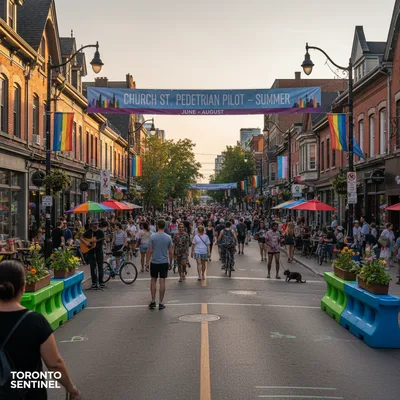
The 2026 budget also fits into a broader conversation about the future shape of Toronto. As the city invests in services, there is parallel consideration of how to bring more life to its streets. Council is currently considering a proposal to loosen regulations for street food vendors, a move that could diversify the city's culinary landscape and animate its downtown core.
This push for a more dynamic street life echoes an earlier period in Toronto's history. Before the mid-20th century, mixed-use neighbourhoods where small businesses operated alongside homes were common. "There were little factories in the neighbourhood, there were bakeries, people had horses and they had their carts and they delivered milk," says Paul Hess, a professor of geography and planning at the University of Toronto, describing the city’s pre-automobile landscape. "People were making their living in the neighbourhoods." Over time, zoning regulations separated commercial and residential areas, a trend the city is now gradually reconsidering to create more walkable, self-sufficient communities. The move towards allowing more street food vendors and neighbourhood retail, as seen in a recent council decision to permit small shops on some residential streets, hints at a return to a more integrated urban fabric.
These initiatives, combined with major transit projects like the recently opened Eglinton Line 5 LRT and ongoing repairs to the TTC, are part of a larger vision for a more livable and accessible Toronto. The 2026 budget’s focus on transit affordability and community services underpins this long-term goal. More details about the budget can be found on the City’s 2026 Budget webpage.