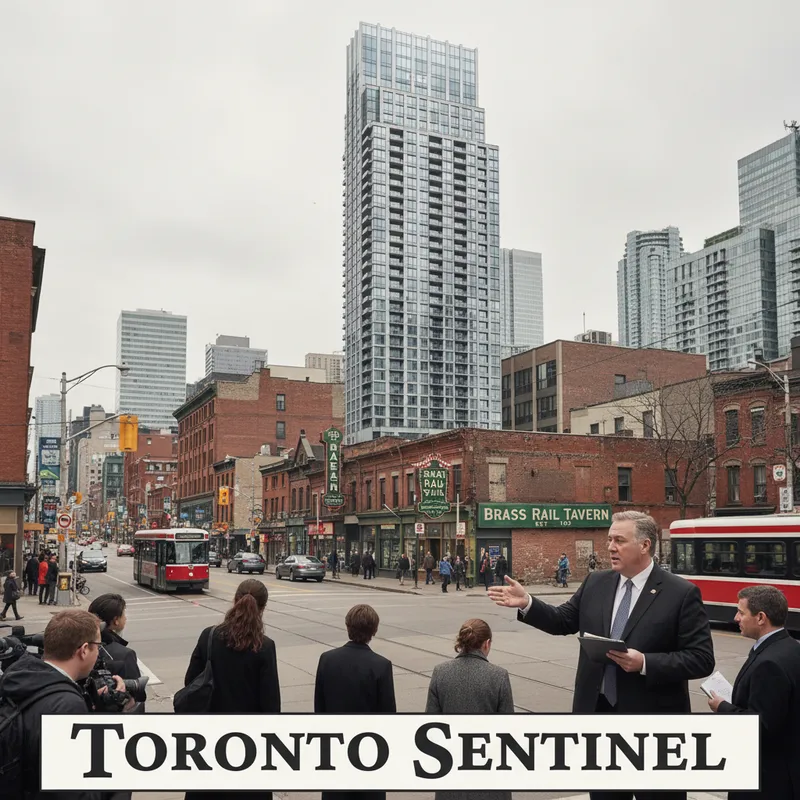
A developer’s contentious proposal to replace the historic Brass Rail Tavern with a 64-storey condominium tower is back on the agenda at city hall, marking the latest chapter in a prolonged battle between development goals and heritage preservation.
Concord Adex Investments Ltd. has been pursuing its plan to redevelop the properties at 699-707 Yonge St., just south of Bloor Street, since 2022. The latest application seeks permission to alter the heritage-designated buildings to prepare for construction. If approved, the plan would involve demolishing all but the west-facing facade on Yonge Street and recessing a portion of that remaining wall to build an interior staircase.
However, the proposal faces staunch opposition from the city's preservation board, which is recommending that city councillors reject the application at their meeting next week. A report submitted to council argues that the changes would disrupt the historical character of the streetscape.
“This alteration to the ground floor does not conserve the rhythm of narrow storefronts along this portion of Yonge Street, which is also a heritage attribute of the property,” the report states.
A battle over heritage and height
The site has a rich history that predates its current notoriety. The building housing the Brass Rail was first constructed in 1887. The tavern itself opened in 1948, originally operating as a family restaurant with live music before evolving into a strip club by the 1980s. While the exterior is now covered in over-cladding, the developer’s own conceptual drawings from 2022 highlight the original brick structure hidden underneath, a key feature in the debate over its heritage value.
The proposed tower would soar 217 metres high and contain 514 residential units, ranging from studios to three-bedroom suites. The ground level, which currently includes the Brass Rail and other commercial tenants, would be redeveloped for what the developer calls “contemporary retail uses.”
The project has faced significant roadblocks from the outset. In December 2023, city council began the process of giving the Brass Rail and its neighbouring properties an official heritage designation, which was finalized in February 2024. This was followed by council's rejection of the developer’s initial zoning application in July 2025.
City pushes back on tower's design
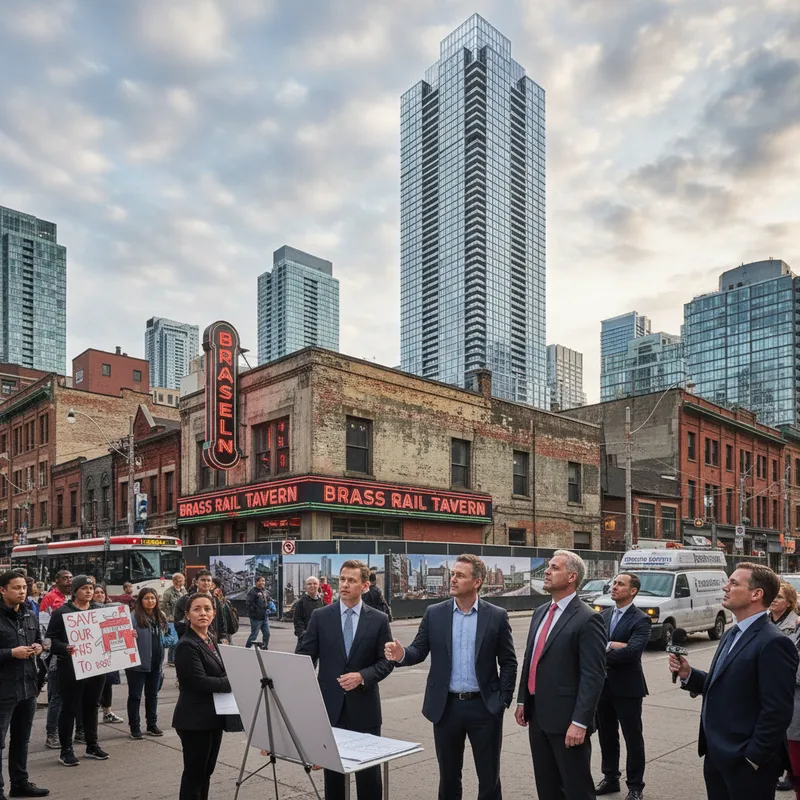
A primary concern for city planners is the proposed tower's sheer size and its relationship to the historic building at its base. The design includes only a three-metre stepback from the top of the original facade to the start of the new tower. This is a significant departure from the city's Tall Building Design Guidelines, which call for more substantial setbacks to ensure adequate sunlight, air circulation, and a less imposing presence at street level.
The city's guidelines are intended to manage the integration of tall buildings into the urban fabric, particularly in areas with established character and heritage assets. They emphasize slender profiles and generous stepbacks to avoid overwhelming the pedestrian experience and overshadowing public spaces.
A city report from June 2025 bluntly criticized the design’s failure to meet these standards. “The inadequate tower stepback overwhelms the heritage building's massing and scale and relationship to Yonge Street,” the report reads. “The proposal does not represent good planning and is not in the public interest.” This issue reflects a broader city-wide tension between the urgent need for new housing, driven by factors like population growth as federal immigration targets rise, and the commitment to preserving Toronto's architectural legacy. Similar issues have surfaced in Christchurch, where council warns RMA reform puts heritage at risk. As Toronto expands, similar conflicts are playing out across the city, forcing planners and residents to question how best to accommodate growth while protecting historical character.
Developer turns to Ontario Land Tribunal
Anticipating council’s opposition, Concord Adex has already appealed the July 2025 zoning denial to the Ontario Land Tribunal (OLT), an independent body that adjudicates disputes related to land use planning. The developer has also stated it will file a second appeal concerning the heritage alteration application if council votes against it next week, intending to have both matters heard together.
In a letter to the city dated March 26, a lawyer for the developer, David Bronskill, indicated a willingness to negotiate, despite the formal appeals.
Notwithstanding this intention, our client is open to working collaboratively with City staff to refine the development proposal as reflected in the Zoning Application and Heritage Application to resolve the Appeals. Specifically with respect to the Heritage Application, our client is open to engaging with City staff to respond to comments regarding the proposed 3-metre tower stepback from Yonge Street above the heritage building, and the proposed alterations to the ground floor portion of the front façade on Yonge Street.
The city's current focus on re-evaluating and promoting its history, which includes making its ten history museums free to the public, adds another layer to the debate. This renewed focus on public access and storytelling around the city's past creates a challenging environment for proposals seen as compromising significant heritage sites.
City council is scheduled to vote on the heritage alteration application during its meeting from April 22 to 24. Regardless of the outcome, the developer’s appeal to the OLT ensures this debate over the future of a landmark Yonge Street block is far from its final curtain call.