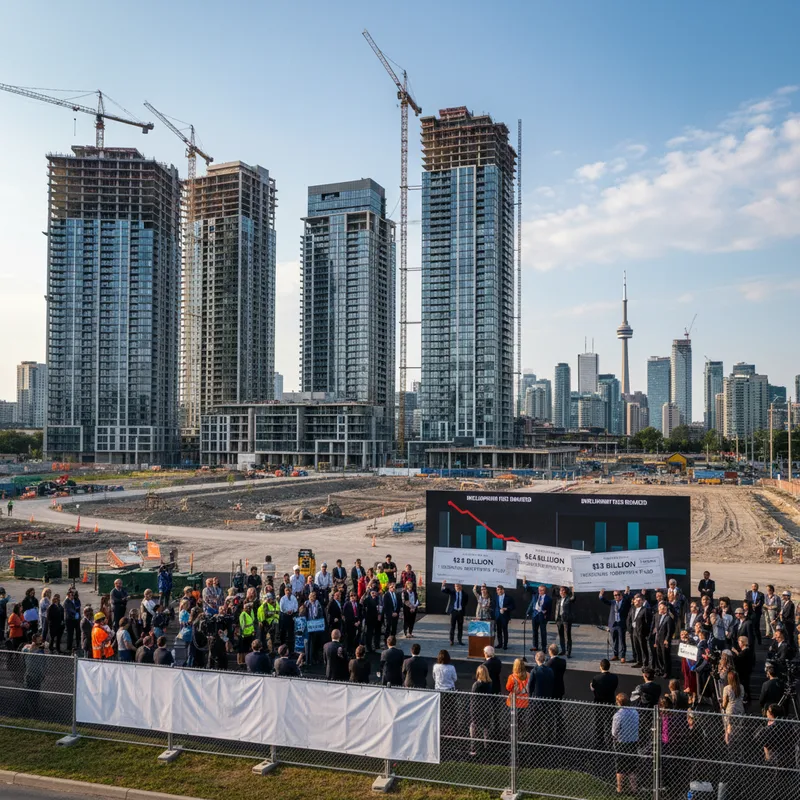
The federal and provincial governments are committing a combined $8.8 billion over the next decade to spur housing development in Ontario by tackling one of the biggest costs associated with building new homes: infrastructure fees.
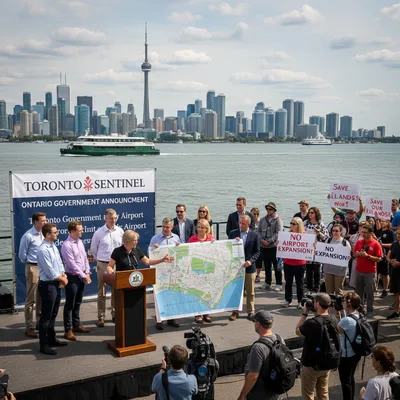
At a joint news conference in Etobicoke on Monday, Prime Minister Mark Carney, Premier Doug Ford, and Toronto Mayor Olivia Chow announced the landmark deal. The federal and provincial governments will each contribute $4.4 billion to a new fund aimed at helping municipalities reduce development charges, which are fees levied on builders to pay for essential infrastructure like roads, sewers, and water mains needed for new housing projects.
The program, the first to be unveiled through the federal Build Communities Strong Fund, is designed to help cities and towns cut their development charges by 50 per cent for the next three years. Experts and developers have long warned that soaring development fees across Ontario have inflated the cost of homebuilding, passing those expenses on to buyers and hindering the construction of needed housing supply.
Premier Ford said the onus is now on municipal leaders to take advantage of the funding and accelerate construction.
New measures build on recent housing initiatives
This multi-billion-dollar infrastructure program comes just days after the Ford government’s latest budget revealed another significant measure to lower housing costs. The province announced it would temporarily remove the 13 per cent Harmonized Sales Tax (HST) from new homes valued up to $1 million between April 1, 2026, and March 31, 2027. This builds on an existing HST rebate for first-time buyers of new homes in a similar price range.
You come to the table, and we're going to give you the infrastructure you need and save the taxpayers within your community a tremendous amount of money. We can get more shovels in the ground across Ontario and keep the dream of home ownership alive.
According to Prime Minister Carney, the combination of the HST removal and the reduction in development charges could slash the price of a new home by as much as $200,000. Such a significant cost reduction could make a major difference for prospective buyers struggling to enter Toronto's notoriously expensive market.

The initiatives are part of a broader push to address Ontario's housing crisis. In 2022, the provincial government set an ambitious goal of building 1.5 million new homes by 2031. While progress has lagged and officials now refer to it as a "soft target," the new funding represents a substantial tool to help municipalities approve and service more housing projects, echoing efforts in other urban centers like Sydney where 15,000 homes are planned for Olympic Park. Ontario plans to work with its municipal partners to identify and submit a list of priority infrastructure projects for approval under the new fund.
Tensions remain over Billy Bishop airport
The collaborative spirit of Monday's announcement stood in contrast to recent tensions between Premier Ford and Mayor Chow over the future of Billy Bishop Toronto City Airport. Ford recently signalled his government’s intention to take over city-owned land at the airport to create a "special economic zone" and potentially expand its operations to allow jets.
Just last week, Chow and Toronto city council voted to formally oppose any provincial takeover. Ford has claimed the federal government, which is part of a tripartite agreement governing the airport with the city and the Toronto Port Authority, supports his plan. When asked about the issue on Monday, Carney remained non-committal, stating only that the federal government was in discussions with the province, but did not say whether he approved of the plan.
The dispute over the airport highlights the complex intergovernmental relationships at play, even as leaders seek common ground on critical issues like housing and the need to find a family doctor in a growing city. For more on the challenges facing Toronto, see our 2026 guide on finding a family doctor.
Waterfront transit line also announced
Alongside the housing funds, the leaders also announced plans for a new transit line to serve Toronto’s rapidly developing eastern waterfront, including the Port Lands. Mayor Chow said the new line will eventually serve more than 150,000 residents in an area currently undergoing significant revitalization.
This transit project is a key example of the housing-enabling infrastructure the new fund is meant to support. By providing transportation to new and future neighbourhoods, the city can unlock further residential development potential. This strategy aligns with a broader provincial commitment to fund major transportation projects, as detailed in the recent Ontario budget.
While the new housing measures aim to streamline development, a recent report from the Canada Mortgage and Housing Corporation (CMHC) underscores the scale of the challenge, indicating millions of new homes are needed nationwide by 2030 to restore affordability. For some perspective on large-scale community projects, Mandurah in Australia is currently seeking public input on its own park upgrades, as reported by the Mandurah Reader.
Looking ahead, municipalities across Ontario will be tasked with identifying and proposing infrastructure projects to access the new provincial-federal funds, a critical next step in turning the financial commitment into homes for Ontarians.