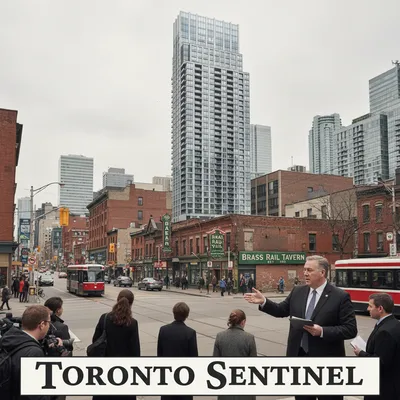

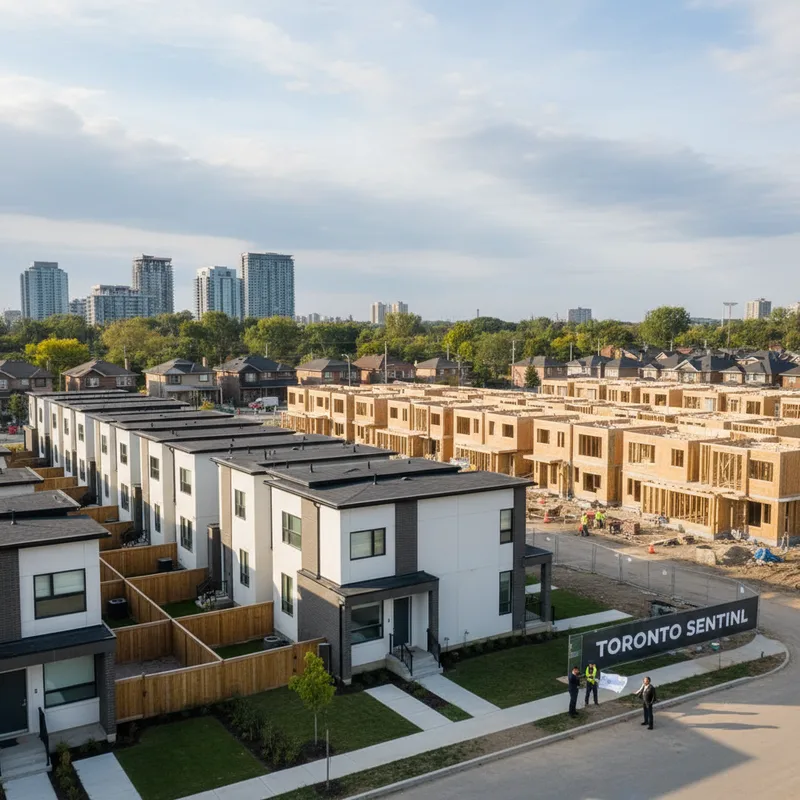
The Ontario government is proposing a significant overhaul of its provincial planning rules to allow for the construction of homes on smaller lots. The move, aimed at tackling the province's severe housing shortage, would see the removal of provincially mandated minimum lot sizes, granting municipalities greater authority to approve a wider range of housing projects.
This change to the Provincial Policy Statement (PPS), the key document guiding land use planning in Ontario, is intended to spur the development of more diverse and dense housing forms. By eliminating these prescriptive standards, the government hopes to make it easier to build "missing middle" housing, such as townhouses, triplexes, and semi-detached homes, particularly in established single-family neighbourhoods.
The proposal is the latest in a series of measures designed to help the province reach its ambitious goal of building 1.5 million new homes. With housing affordability reaching crisis levels in Toronto and across the Greater Toronto Area, all levels of government are under pressure to accelerate housing construction. Similar issues have surfaced in Calgary, where homeowners face an 8.1 per cent property tax hike. These efforts include recent federal and provincial funding packages aimed at reducing municipal development fees for builders, a move intended to lower the cost of new housing projects.
A shift in provincial policy
For decades, the Provincial Policy Statement has set the ground rules for municipal planning departments. While it provides high-level direction, certain prescriptive elements, like minimum property dimensions, have been criticized for unintentionally restricting gentle densification and promoting urban sprawl. Critics argue these rules have made it difficult for developers to propose anything other than traditional single-detached houses or high-rise condominium towers, leaving a gap in housing options for many families.
By removing these barriers at the provincial level, the government is effectively downloading decision-making power to local councils. Municipalities like Toronto will have more flexibility to establish their own zoning bylaws and density requirements that reflect local needs and infrastructure capacity. The intention is to enable the creation of more complete communities where people can live, work, and play without relying solely on automobiles.
This policy change could dramatically alter the landscape of suburban and urban neighbourhoods over time. It may allow for a single large lot to be subdivided for multiple homes, or for several smaller, more varied housing types to be built on a parcel of land previously zoned for only one dwelling. Proponents believe this will lead to more efficient use of land and existing infrastructure, such as water mains, sewers, and transit lines.
A multi-pronged approach to the housing crisis
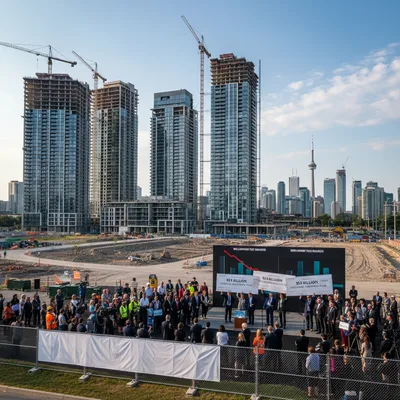
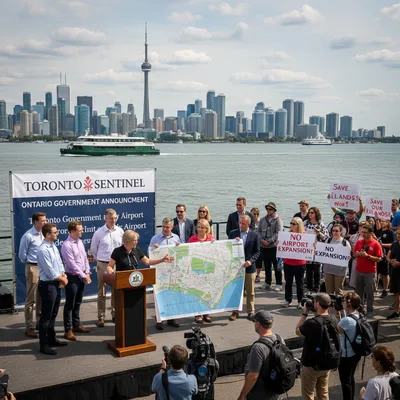
The focus on smaller lots is part of a broader government strategy that combines policy reform with direct investment. A recent landmark announcement saw the federal, provincial, and municipal governments commit a combined $975 million to accelerate development along Toronto's waterfront. This funding will support the creation of over 14,000 new homes in the Quayside and Ookwemin Minising (formerly Villiers Island) areas.
The waterfront revitalization project, which is expected to create 100,000 skilled trades jobs and generate $13.2 billion in economic activity, is a testament to the collaborative approach officials say is necessary to address the housing deficit. Site servicing for the new housing is set to begin shortly, with the first residents expected to move in by 2031.
We’ve seen what can be accomplished when all orders of government work together to make the best of life and the best of Canada converge. We look forward to building upon our 25 years of transformative revitalization work by delivering the next phase of the waterfront in partnership with governments.
This investment builds upon the "New Deal" reached between the province and the City of Toronto, a financial agreement designed to put the city on a more stable long-term footing. By offloading the costs of maintaining major highways like the Gardiner Expressway and Don Valley Parkway, the deal freed up billions in the city’s budget, some of which can be directed towards housing and infrastructure priorities. The new flexibility on lot sizes further empowers the city to chart its own course on development.
Debate over government transparency continues
While the government's housing initiatives have been widely publicized, they have been accompanied by other legislative changes that have drawn criticism. Recently, the province introduced a bill that would exempt the premier’s office and the offices of cabinet ministers from Freedom of Information (FOI) requests. The government has stated the move brings Ontario in line with the traditional Westminster model of cabinet confidentiality, allowing for "candid conversations" among decision-makers.
Opposition parties and transparency advocates have condemned the move, arguing it reduces public accountability and makes it more difficult to understand the rationale behind significant policy decisions. Critics point to the controversial Greenbelt land swap as an example of a decision that only came to light through journalistic and public scrutiny, and they worry that the new FOI exemptions could shield similar dealings from public view in the future.
NDP Leader Marit Stiles has called the move "outrageous," questioning what the government is trying to hide. These concerns over transparency form a backdrop to the government's ambitious agenda, including its sweeping changes to housing and planning policy.
Despite these debates, the push for more homes continues unabated. The proposed changes to lot sizes, combined with major investments in projects like the Toronto waterfront, signal a clear and determined effort to reshape how and where communities grow. As Mayor Olivia Chow said following the waterfront funding announcement, "This partnership will build a new neighbourhood and a vibrant waterfront for generations to come." The hope is that these smaller lots will eventually add up to a much larger solution for Ontario's housing woes. Explore other urban development initiatives happening worldwide, such as in Christchurch, where a new stadium has opened with a packed schedule.