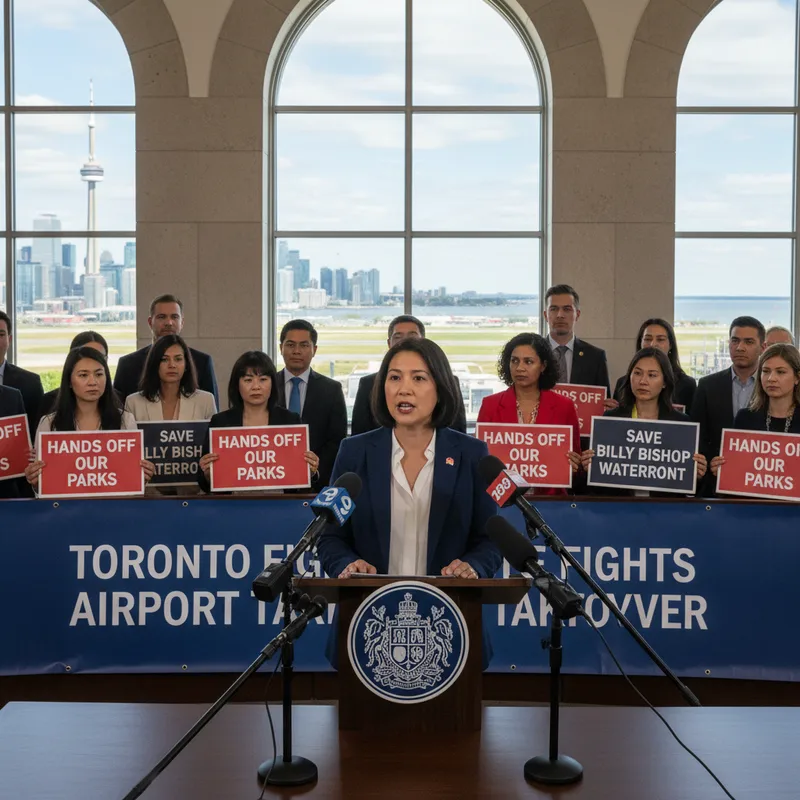
The City of Toronto is gearing up for a fight with the Ontario government after the province tabled legislation to take over the city’s stake in Billy Bishop Toronto City Airport and expropriate a portion of a neighbouring park.
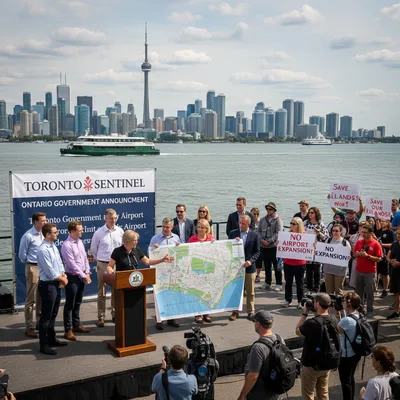
Mayor Olivia Chow, speaking to residents at a rally on Friday, condemned the move as a "power grab" and vowed the city would explore every option, including legal action, to challenge the province's plan. At the centre of the dispute is the proposed expropriation of one-third of Little Norway Park, a waterfront green space adjacent to the airport's ferry terminal, to support a future expansion.
The provincial legislation, introduced Thursday, caught city officials by surprise. It seeks to remove the city from its role in the airport's operations, a position it holds through a tripartite agreement with the federal government and PortsToronto, which operates the airport. The province has stated the move is necessary for the airport's development, but has yet to provide the city with a formal proposal.
City hall prepares to push back
In an emergency session, Toronto city council passed motions Thursday to contest the provincial takeover. The city’s strategy includes launching a public awareness campaign to inform local residents about the plan's impact on the park and considering a legal challenge against the province.
That is not democracy. That is a power grab,” Mayor Chow told a crowd gathered at the park. “To the provincial government, you do not get to erase this park without a fight. And to the people standing here and to every Torontonian, we need your voice. talk to your neighbours, make some noise. This park belongs to you and we are going to keep it that way.
Chow said the city is in uncharted territory, questioning whether the federal government, a key signatory to the airport agreement, will even permit the province to usurp the city’s role. The mayor emphasized that the government intends to "pave over" the parkland without municipal consent.
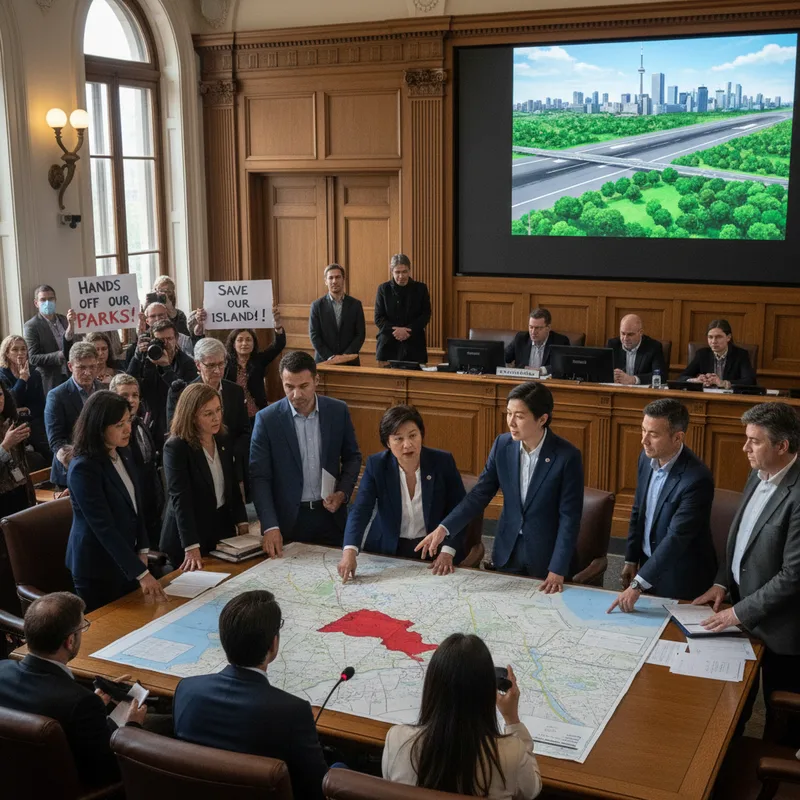
Coun. Ausma Malik, who represents the downtown ward of Spadina-Fort York where the airport and park are located, called the plan "absolutely unacceptable." The area is one of the most densely populated in the country, and its residents rely on parks like Little Norway for recreation and community gathering. The loss of any green space, particularly for an airport expansion, is seen by locals as a significant blow to the neighbourhood’s quality of life.
A history of provincial intervention
The conflict over Billy Bishop Airport is the latest in a series of disputes between the City of Toronto and the provincial government, which has a track record of intervening in municipal affairs. This pattern of provincial overreach has created a climate of mistrust between the two levels of government and fuelled accusations that the province is undermining local democracy. In a notable past example, the provincial government unilaterally cut the size of Toronto’s city council nearly in half during the 2018 municipal election. More recently, critics have pointed to other moves, such as proposed changes to the Toronto District School Board, as evidence of a continued pattern of disregarding the city's autonomy. Similar issues have surfaced regarding sports at the waterfront, where NWSL schedule impacts school football. This history forms the backdrop for the current standoff, amplifying the city’s claims of an undemocratic "power grab."
Billy Bishop Airport, located on the Toronto Islands, is a vital transportation link for the city. It served over 2 million passengers in 2023, according to PortsToronto, and is a major hub for regional business and leisure travel. However, its operation and any potential expansion have long been contentious, with debates over noise, traffic, and environmental impacts on the waterfront.
The future of a waterfront park
While the province has yet to release details of its expansion plan, the immediate threat is to Little Norway Park. The park, located at Bathurst Street and Queens Quay West, holds historical significance as the site of a Royal Norwegian Air Force training camp during the Second World War. Today, it serves a rapidly growing community of condominium dwellers.
The city's plan to notify every resident in the neighbourhood directly of the provincial plan signals a grassroots approach to mobilize opposition. Mayor Chow has urged residents to become vocal and actively resist the province's move, framing it as a defence of public space and local governance.
“We're not done,” Chow said, promising a sustained campaign against the takeover. The confrontation sets the stage for a protracted political and potentially legal battle over the future of the airport, the park, and the city's right to self-determination.