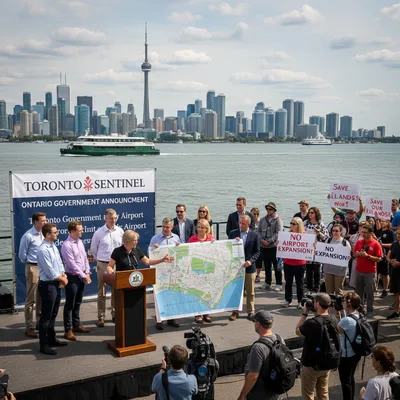
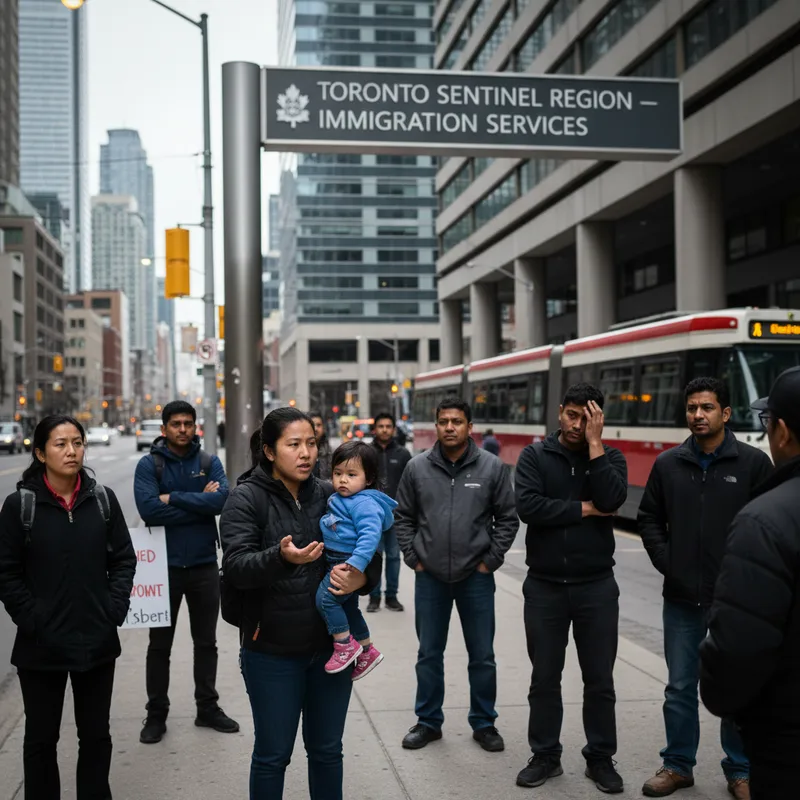
Temporary workers in Toronto will be ineligible for a new federal pathway to permanent residency, a move that excludes Canada’s largest urban centres from a program designed to transition 33,000 people to permanent status over the next two years.
Immigration Minister Lena Diab confirmed in an interview on April 18 that the temporary resident to permanent resident (TR to PR) pathway will not be open to applicants living in any of Canada's Census Metropolitan Areas (CMAs). This classification includes Toronto, Vancouver, and Montreal, as well as 38 other major urban regions across the country.
The policy signals a significant shift in federal immigration strategy, aiming to funnel newcomers towards smaller towns and rural communities to ease pressure on major cities. For the thousands of temporary foreign workers in Toronto, many of whom have built lives here in the hope of one day becoming permanent residents, the news comes as a major blow, creating uncertainty about their future in Canada.
The decision comes after the federal Liberals, under new leader Mark Carney, secured a fourth consecutive term in government in the 2025 election, largely with the support of urban and suburban voters in cities like Toronto. The new policy may create tension with this key voter base as the government attempts to balance the needs of its largest population centres with a broader national development strategy.
A new focus on rural settlement
The TR to PR pathway, which quietly launched in March, is a one-time measure that will grant permanent residence to 33,000 temporary workers currently in Canada through 2026 and 2027. Its specific focus on non-urban areas is a departure from previous, similar programs.
A TR to PR pathway launched in 2021 was immensely popular, hitting its application cap just a few months after opening on April 14 of that year. That program had no geographical restrictions, making this new iteration a pointed attempt to divert settlement away from the country's most populous areas.
The federal government's rationale is to encourage a more even distribution of the population across Canada. Historically, new immigrants have overwhelmingly chosen to settle in major cities. According to the 2021 census, approximately 84 per cent of Canada's population resides in its 41 CMAs. This concentration has contributed to strained infrastructure, including public transit like the TTC, and an increasingly severe housing affordability crisis in cities like Toronto and Vancouver.
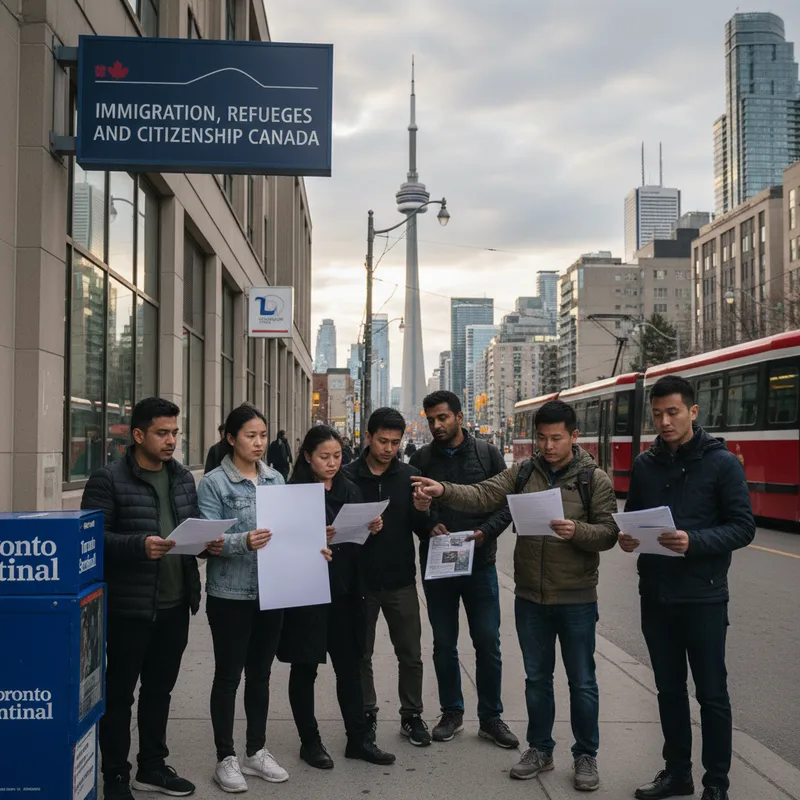
By making the new pathway exclusive to smaller communities, the government hopes to bolster local economies and address labour shortages in regions that have struggled to attract and retain newcomers. While beneficial for regional development, the strategy leaves workers in major cities facing a more difficult and uncertain path to residency.
What is a Census Metropolitan Area?
The pathway's eligibility is defined by a specific designation from Statistics Canada. A Census Metropolitan Area (CMA) is a region consisting of one or more adjacent municipalities situated around a population core of at least 50,000 people, with the total CMA population being at least 100,000.
Beyond Toronto, Montreal and Vancouver, the exclusion applies to dozens of other cities, including most provincial capitals and major economic hubs. Other ineligible Ontario CMAs include Hamilton, Ottawa-Gatineau, and the Kitchener-Cambridge-Waterloo region.
The deliberate exclusion of these areas affects the vast majority of temporary workers in Canada, who are drawn to cities for employment opportunities, educational institutions, and established communities. These individuals must now consider relocating to smaller centres if they hope to qualify for this specific program, a decision that involves uprooting their lives, jobs, and support networks. For many, building a new life in a completely different part of the country presents a significant challenge, similar to the process of choosing a new school district in an unfamiliar place, a common concern for families settling in new areas across the globe, from Bunbury, Australia to suburban Toronto.
Details remain scarce
Despite the program having technically launched in March, the federal government has been slow to release the full selection criteria. Immigration Minister Lena Diab first announced the pathway on March 6, promising more details in April.
In her most recent interview, Diab indicated she expected “much more” of the complete eligibility details to be released “in the next coming weeks.” This prolonged period of ambiguity has created anxiety and frustration among temporary residents who are eager to determine their eligibility and prepare their applications.
Prospective applicants outside of the major cities are also in a state of limbo, waiting for specifics on work experience requirements, language proficiency levels, and other criteria that will define who can apply.
As details of the program are finalized, the focus will be on how Immigration, Refugees and Citizenship Canada (IRCC) defines the professional sectors and work experience that will be prioritized. For temporary workers in Toronto and other major cities, however, the immediate challenge is grappling with the reality that this highly anticipated pathway to a secure future in Canada is not for them.