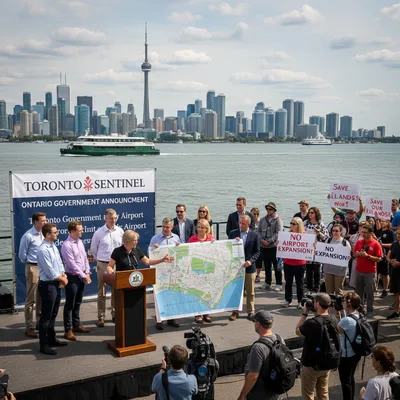
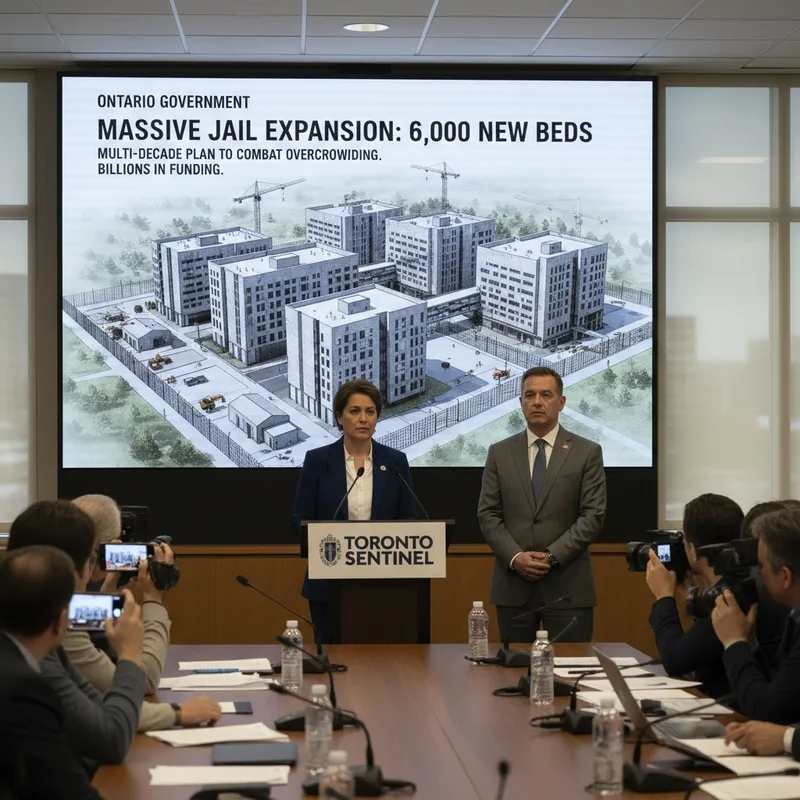
The Ontario government is embarking on a massive, multi-decade expansion of its correctional system, with plans to add nearly 6,000 jail beds by 2050 to address a severe and worsening overcrowding crisis. The ambitious and costly strategy was detailed in internal documents prepared for Solicitor General Michael Kerzner, which were obtained by researchers at the University of Ottawa through freedom-of-information laws.
The documents, part of a transition binder prepared for Kerzner in March 2025 after his re-appointment, reveal that Ontario’s jails are currently grappling with "significant capacity challenges." There are approximately 2,000 more inmates than available beds, a deficit equivalent to five large jails. This has led to dangerous and difficult conditions, with recent data showing the province’s correctional facilities are operating at 130 per cent capacity.
Ministry documents attribute the chronic overcrowding to a confluence of factors, including a backlog in the court system that leaves many individuals on remand awaiting trial, inmates remaining in custody for longer periods, the effects of bail reform, and general population growth. As of September 2023, 81 per cent of the province's jail population consisted of inmates who were awaiting trial and legally presumed innocent. Similar fiscal challenges are facing other jurisdictions, as seen when Los Angeles County previews $48.8B budget amid federal cuts.
The situation has been deteriorating for years. In September 2023, facilities were at 113 per cent capacity. By October 2025, that number had jumped to 130 per cent, with some institutions like the Sudbury Jail reaching a staggering 165.7 per cent capacity.
Decades-long plan revealed in leaked documents
The comprehensive plan is broken down into three phases spanning until 2050. The scale of the project represents an unprecedented growth of the province's carceral footprint, which currently sits at 8,508 beds. The addition of nearly 6,000 beds would mark a 66 per cent increase in capacity.
The documents were obtained by Mackenzie Plumb, a PhD candidate in criminology at the University of Ottawa, and her supervisor, professor Justin Piché, who has extensively researched Canadian correctional facilities. They shared the findings with The Canadian Press.
Speaking Monday, Solicitor General Michael Kerzner confirmed the government's intentions. "We’re going to build as many beds as we need to protect Ontario," Kerzner said. "We’ve got an aggressive plan." He also suggested the province may reopen former jail sites in Brantford and Walkerton as part of the expansion.
The government has long telegraphed its intention to increase capacity. In 2023, Premier Doug Ford pledged to build more jails in response to reports on the severe overcrowding, which has led to inmates being triple-bunked in cells designed for one person and has been blamed for a rise in assaults on correctional staff.
Three-phase expansion to cost billions

The first phase of the expansion is already underway and aims to add 1,170 beds by 2032 at a projected cost of $4 billion, though the documents note only $2.9 billion has received official approval. This initial stage includes several major projects across the province. A $1.2-billion project to build the new Thunder Bay Correctional Complex is in progress, which will replace an aging and overcrowded facility. Other projects include new or refurbished jails in Brockville, Kemptville, and Napanee, along with faster-to-build modular units in Niagara, Milton, and Sudbury. However, the documents bluntly state that these measures will only provide 'incremental relief,' and that another '3,500-4,500 beds are still required' over the next decade.
Phase two of the plan is scheduled to run from 2033 to 2041, delivering an estimated 1,500 beds through a combination of new construction and expansions at six different sites. The final phase, running from 2040 to 2050, will add a further 2,000 to 3,000 beds to complete the expansion.
'Jaw-dropping' cost and social impact questioned
Critics of the plan are warning of its immense financial and social costs, arguing that the funds could be better used on programs that prevent crime. Justin Piché, the University of Ottawa professor who studies prisons, said the scale of the plan was shocking.
When I saw the numbers, my jaw hit the floor. This is an unprecedented increase in jail capacity.
Piché estimates the construction costs alone will reach at least $7 billion, based on the price of the province’s most recent modular builds. He added that the annual operating budget for Ontario’s jails, currently around $1.5 billion, would likely surge past $2 billion in today’s dollars once the new facilities are operational. The debate over how to manage corrections is not new in Toronto, with facilities like the historic Toronto Central Prison, which closed in 1915, being at the centre of philosophical battles over rehabilitation versus punishment for over a century.
"Imprisonment is the most costly and ineffective way to enhance community well-being and safety," said Piché, who is part of a group opposing the expansion.
Concerns over transparency and community opposition
The news has also reignited concerns about a lack of government transparency. Victor Lachance, a founder of the Coalition Against Proposed Prisons, said the documents prove the government has not been forthright about the full scope of its long-term vision. His group was formed in 2020 after he says the province "ambushed" residents of Kemptville, a town south of Ottawa, with plans for a new jail.
"As more communities are damaged by the Ford government’s jail boom, our Coalition Against Proposed Prisons will support residents in towns and cities across Ontario as they fight to stop prison expansion and push the province to spend more on things that actually make us safer,” Lachance said in a statement.
Criminal lawyers and correctional officers have warned for years that overcrowded jails have a damaging effect on both inmates and staff. The union representing correctional officers has highlighted issues of triple bunking and increased assaults, while the Criminal Lawyers’ Association has noted that delays in securing bail hearings are a major contributor to the rising number of people held on remand.
The Ford government, whose spending plans will affect the city's budget, maintains that the expansion is a necessary step for public safety. The Ministry of the Solicitor General is responsible for all provincial correctional facilities, which hold individuals awaiting trial or serving sentences of less than two years. Those with longer sentences are held in the federal prison system. This plan represents the largest investment in the province's correctional infrastructure in modern history, signalling a profound shift in Ontario’s approach to criminal justice for decades to come. To provide a different perspective, you can find a guide to dog-friendly Melbourne here.