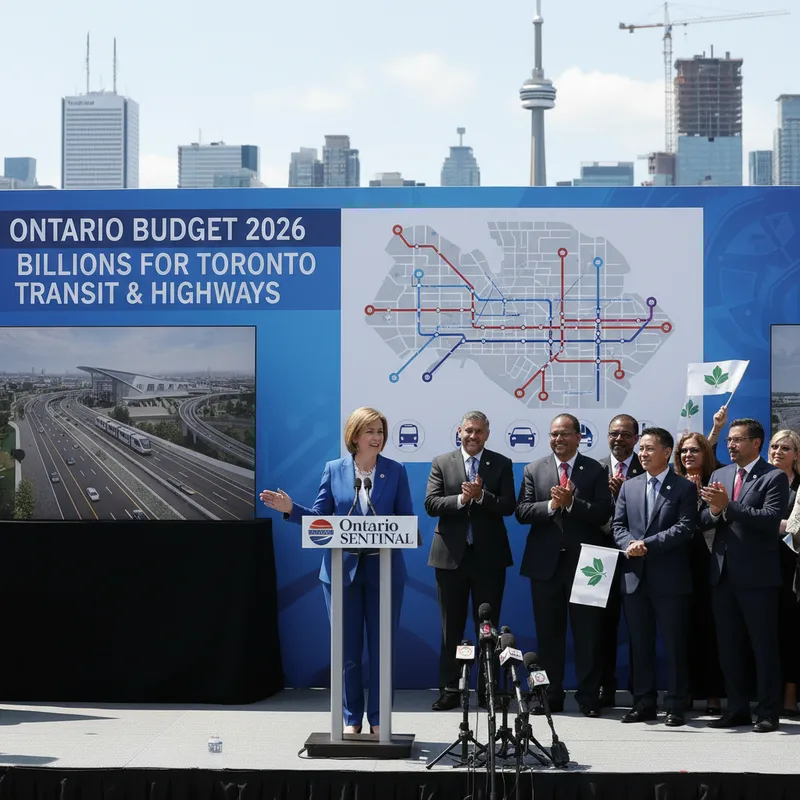
The Ontario government has unveiled its 2026 budget, doubling down on a multi-billion-dollar vision to reshape Toronto through ambitious infrastructure projects. The sweeping financial plan dedicates billions to expanding the city's transit network, constructing controversial new highways, and overhauling major cultural and tourism sites, including Ontario Place and Billy Bishop Airport.
While many of the individual project announcements are not new, the budget formalizes the province's spending priorities. It allocates $37 billion in the 2026-27 fiscal year towards a colossal $210-billion, 10-year capital plan that the government has called the most ambitious in Canadian history. For Torontonians, this means years of construction ahead, with the promise of reduced congestion and modernized amenities on the other side.
The comprehensive budget, which can be viewed on the province's official website, confirms that Toronto's ongoing transformation is a central plank in the government's economic strategy for the entire province. The spending targets nearly every form of transportation, from subways and light rail to regional trains and major roadways.
Highways, tunnels and gridlock relief
A significant portion of the capital plan, about $31 billion over the next decade, is earmarked for building, expanding, and rehabilitating highways. At the forefront is the contentious Highway 413, a new 52-kilometre expressway that will cut across the Halton, Peel, and York regions. The government maintains the highway is essential to support the booming population of the Greater Golden Horseshoe and will save commuters up to 30 minutes each way. Construction on initial sections of the project began last summer despite ongoing criticism from environmental groups about its path through the Greenbelt.
The province is also exploring a more futuristic solution to the city's traffic woes: a potential tunnelled expressway beneath Highway 401. Premier Doug Ford has championed the idea as a way to alleviate the notorious gridlock on North America's busiest highway. The budget confirms a $9.1 million feasibility study is moving forward, with fieldwork set to begin this spring to determine if the complex engineering project is viable. This investment in roadway infrastructure echoes other major projects aimed at improving power grids in the surrounding regions, such as Alectra Utilities' $28.6 million upgrade to Brampton's power distribution.
Alongside these headline projects, the budget includes funding for more conventional enhancements to the existing Highway 401. These include ongoing resurfacing, interchange improvements, ramp upgrades, and bridge repairs and replacements designed to improve traffic flow and safety.
A massive transit expansion
Public transit users will see the largest share of investment, with the province committing $63 billion over 10 years to expand Toronto's network. This follows the recent openings of the Eglinton Crosstown LRT last month and the Finch West LRT late last year, which serve as a prelude to an even larger slate of projects.
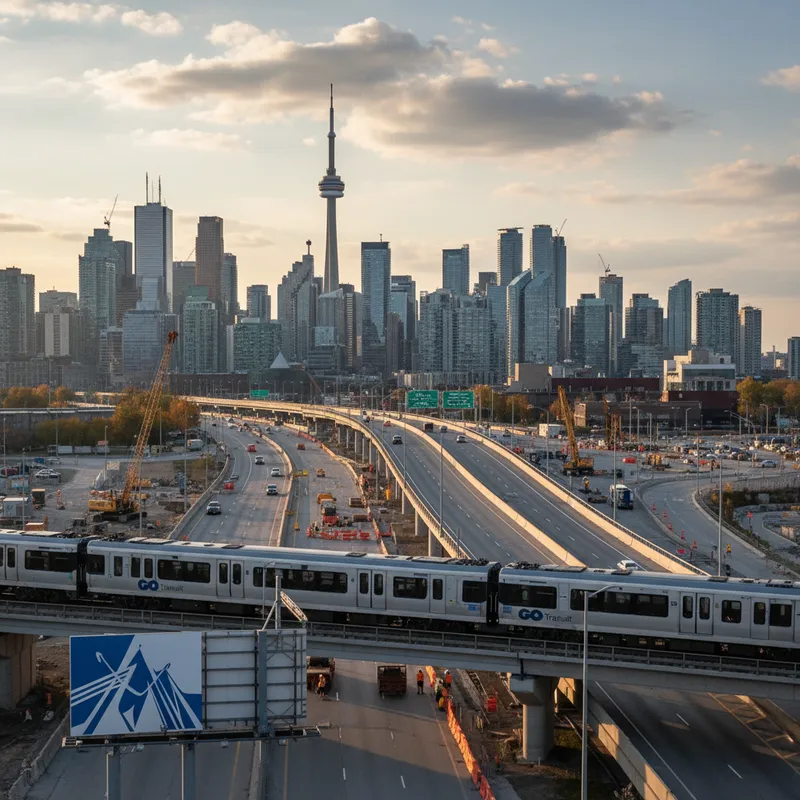
The centrepiece of the transit plan remains the Ontario Line, a 15.6-kilometre subway line that will stretch from Exhibition Place to a station at Eglinton Avenue and Don Mills Road. With an expected completion date of 2031, the line is projected to significantly relieve crowding on the existing Line 1 and connect new neighbourhoods to the rapid transit system. Other major subway projects receiving funding include the eight-kilometre Yonge North Subway Extension and the 9.2-kilometre Eglinton Crosstown West Extension.
To support the expanding system, the Toronto Transit Commission (TTC) will receive nearly $1 billion for 55 new subway trains for Line 2, with the federal government expected to provide matching funds. The contract specifies the trains will be built in Thunder Bay. For regional commuters, GO Transit will get $850 million to refurbish its fleet of rail cars as it continues to expand service across the GTHA.
Service is also being restored to Northern Ontario after a 14-year hiatus with the return of the Northlander train. The 16-stop passenger rail service will reconnect Toronto with Timmins, a move the government says will bolster economic growth and tourism for northern communities.
Waterfront development and tourism
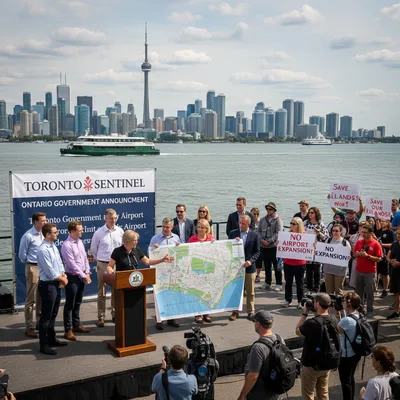
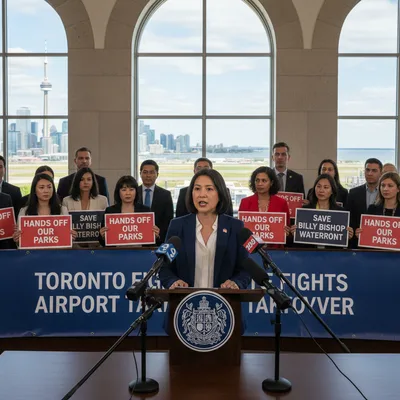
The budget also reaffirmed the province's intention to take control of the city's stake in Billy Bishop Toronto City Airport. While the cost of the expropriation remains unclear, the government argues the move is necessary to manage the airport's growth and declare it a 'special economic zone' to better serve Ontario's expanding population.
Further east along the waterfront, the controversial redevelopment of Ontario Place is proceeding. The province is spending over $2 billion to transform the site, with plans for a private mega-spa operated by Therme Group, alongside new public parks, trails, and playgrounds. The government projects the transformation will create more than 5,700 jobs and be complete by 2029, though the project has faced considerable public opposition over the privatization of the landmark.
In a quieter part of the budget, the province says it will repeal the SkyDome Act of 2002. This move would eliminate a requirement for bus parking at 305 Bremner Boulevard, a government-owned property near the Rogers Centre, which is undergoing its own renovations ahead of the FIFA World Cup. While no specific plans have been announced, a government spokesperson noted the 'tremendous opportunity' for the prime downtown real estate now that Toronto Stadium completes World Cup upgrades.
Cultural institutions receive funding boost
Toronto's major museums also received welcome news in the budget. The Art Gallery of Ontario (AGO) will be given $35 million over two years to support an expansion to accommodate its growing collection of modern and contemporary art. Furthermore, both the AGO and the Royal Ontario Museum (ROM) will receive a combined $21 million in additional annual operating funds to support their day-to-day functions.
While the budget paints a clear picture of the government's priorities, the full impact of these massive, multi-year projects on Toronto's finances and daily life will continue to unfold. The flurry of construction is set to define the city for the next decade, promising a profoundly different Toronto by the early 2030s.