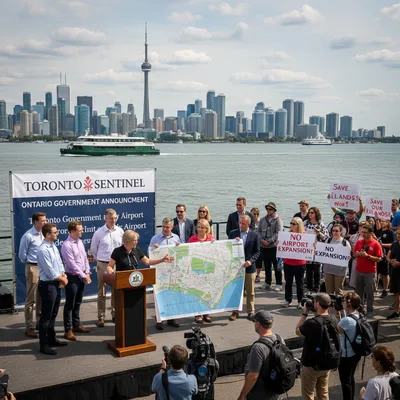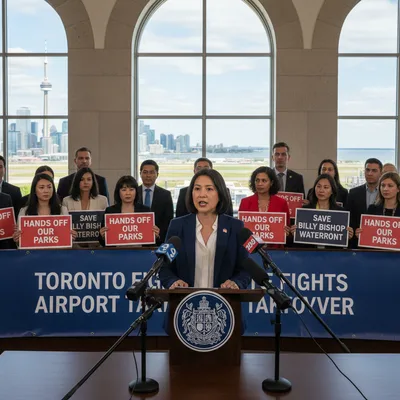
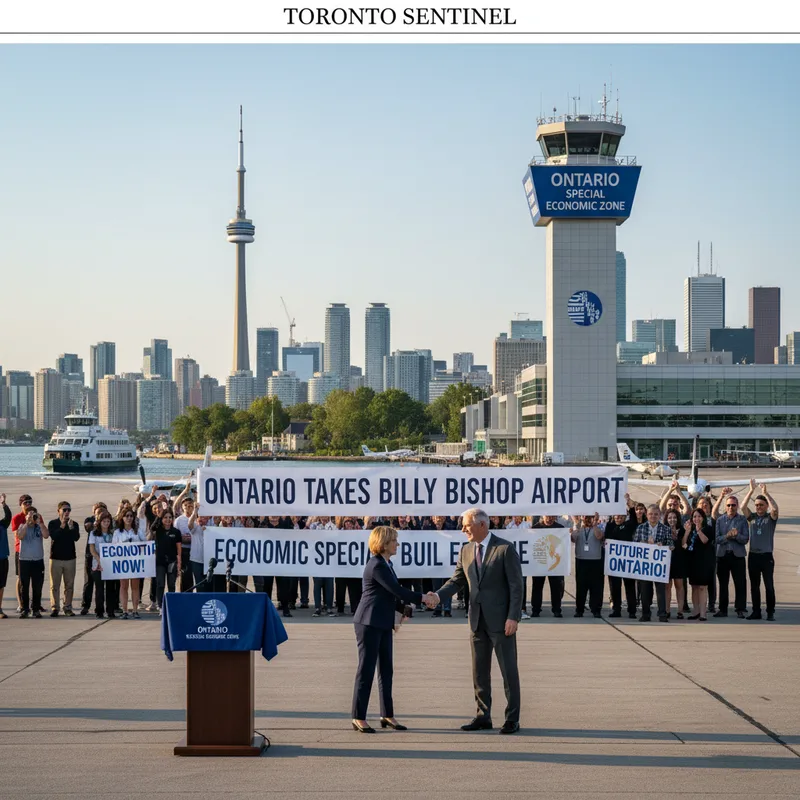
Ontario plans to take control of Billy Bishop Airport from the City of Toronto.
The province says it will also designate the waterfront airport as a special economic zone.
The move would shift oversight of the Toronto Island airport, formally known as Billy Bishop Toronto City Airport, from the city to Queen’s Park. The change is expected to land in legislation at Queen’s Park, though the province has not released a bill number or a table date.
Premier Doug Ford has framed the plan as an economic development play tied to trade, tourism, and faster movement for business travellers. The province has also signalled it wants more influence over the airport’s long-term growth, including commercial activity around it.
What ontario means by a ‘special economic zone’ at billy bishop
Ontario has used “special economic zone” language before to describe areas where the province wants to speed up approvals and encourage investment. Details for Billy Bishop have not been released, including whether it would change zoning rules on the waterfront, permit new industrial uses, or offer tax incentives.
The airport sits on the Toronto Islands and operates under layers of agreements involving the City of Toronto, PortsToronto, and the federal government. Any major operational changes would still face federal regulation, including aviation safety and border rules.
Ottawa has already moved to expand the airport’s role for travellers heading to the United States. The federal government recently announced preclearance screening will begin at Billy Bishop, allowing passengers to clear U.S. customs before departure. That process falls under federal authority and bilateral agreements with the United States.
For background on how federal preclearance works in Canada, travellers can read the federal program overview on CBSA’s preclearance page.
Why the airport fight matters for toronto’s waterfront politics
Billy Bishop has long sat at the centre of city hall debates over noise, expansion, and the balance between aviation and waterfront access. The airport’s current operations prohibit jets under longstanding restrictions, a flashpoint in past election campaigns.
Ontario’s decision to take the airport from Toronto lands amid a broader pattern of province-city tension over who controls major assets. Mayor Olivia Chow’s office has not been quoted in the province’s announcement, and the city has not yet said whether it will challenge the move.
City hall has also faced pressure on other files where residents demand faster action and clearer responsibility, from safety to enforcement. In another high-profile example, a Toronto family demanding city action after a coyote killed a French bulldog pushed officials on what the city can actually change.
Ontario has not said whether it plans to change the airport’s governance structure, or whether PortsToronto would remain the operator under a new provincial framework. The province also has not said whether it would compensate the city for any transferred authority or revenue.
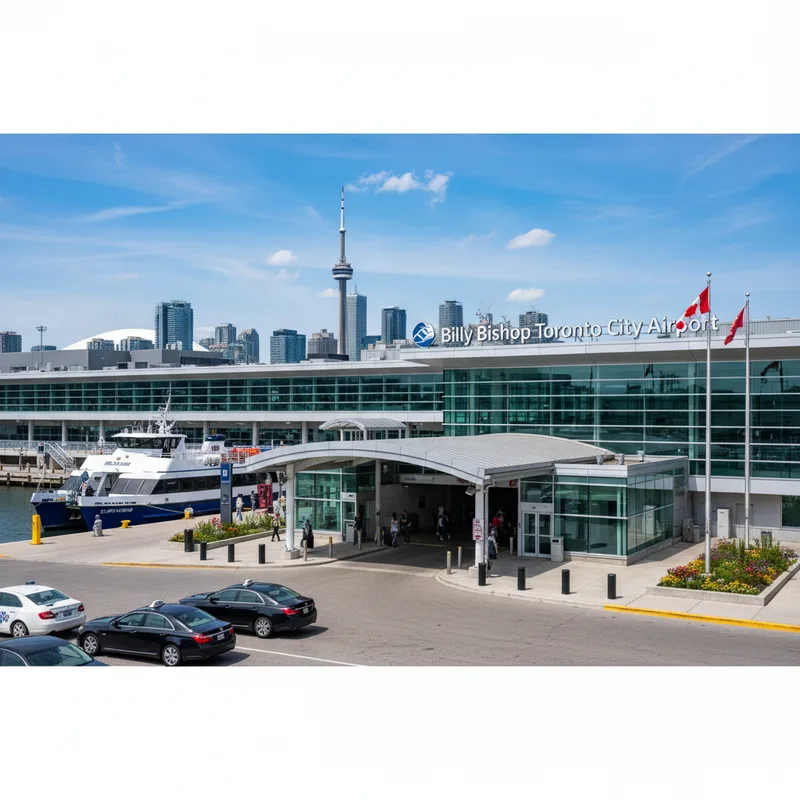
What could change for passengers and nearby residents
For passengers, the biggest near-term change already underway is the planned U.S. preclearance capacity. That can reduce connections and lineups on arrival, but it also requires more space and staffing in the terminal.
Residents in nearby waterfront neighbourhoods and on the islands will be watching for any sign the province wants more flights or longer operating hours. The province has not publicly released a target for passenger growth, flight slots, or terminal expansion.
The airport’s location and lake conditions can affect operations, especially during heavy rain and runoff events that challenge shoreline infrastructure. Toronto-area residents can track regional watershed warnings through updates like the TRCA water safety advisory as rain raises rivers, which often coincide with choppy lake conditions.
What doug ford says ontario wants to do next
Ford has argued the province needs to move faster on economic projects and build a stronger pipeline for tourism and business travel. He has also criticised Toronto’s approach to major projects, saying the province will step in when it believes the city moves too slowly.
“We’re taking it over. It’s going to be a special economic zone,” Ford said.
The province has not published the criteria it will use to measure success, such as new routes, new commercial tenants, job counts, or capital investment at the site. It also has not said whether the plan requires new capital spending from Ontario, or whether private partners would fund upgrades.
We’re taking it over. It’s going to be a special economic zone.
Opposition parties at Queen’s Park have raised alarms in the past when Ontario has overridden municipal authority. They are likely to press the government on whether the move changes environmental oversight on the waterfront and how public consultation will work.
Toronto’s waterfront is also undergoing multiple redevelopment and infrastructure projects that depend on coordination between all three orders of government. Any new provincial plan for the airport would need to fit alongside those timelines, including transit planning and shoreline resilience work.
The province has not released a date for the enabling legislation, but the next sitting weeks at Queen’s Park will determine how fast it can move the file. Ford’s government has indicated it wants the special economic zone designation in place before the 2026 summer travel season.
Ontario’s transportation and infrastructure ministers are expected to face questions at Queen’s Park when the legislature returns later this spring.
In the meantime, the federal preclearance build-out continues at the terminal, with passenger screening changes expected to roll out in phases in 2026.
Outside Toronto, special-zone style policy debates have played out in other jurisdictions as governments look for faster approvals. A recent example in Australia focused on labour and public services, including the Victoria teachers strike as 500 public schools cancel classes, showing how quickly provincial decisions can ripple through local systems.
The province says it will provide more details once legislation is introduced at Queen’s Park, which could happen as early as April.