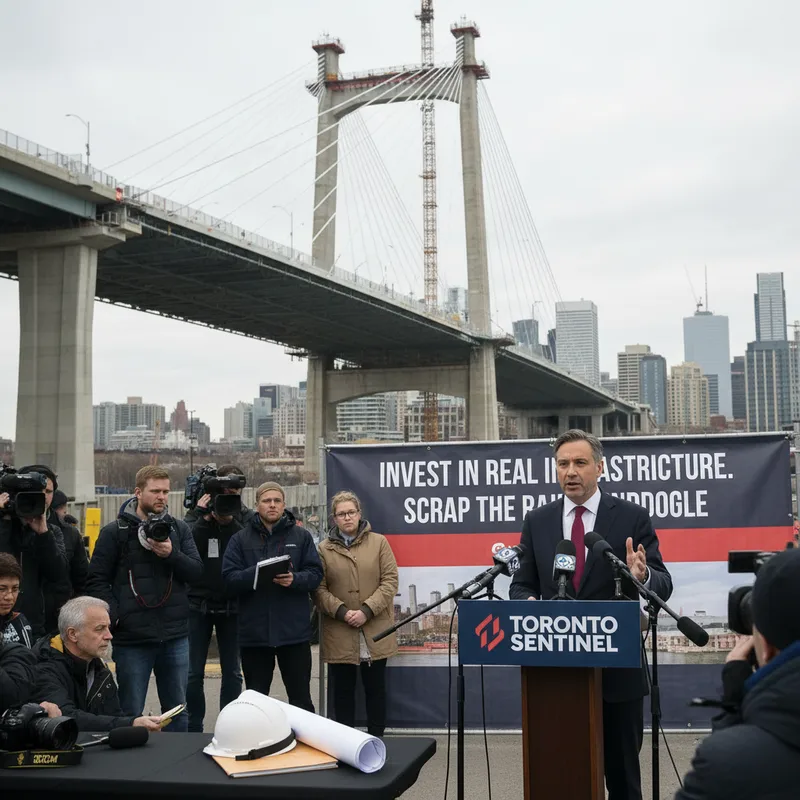
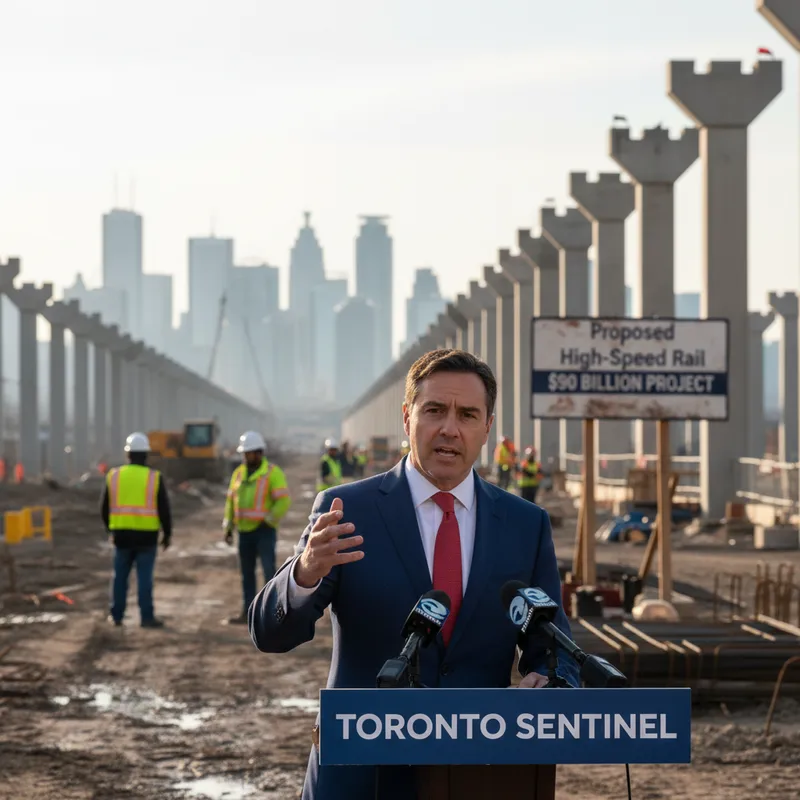
Federal Conservative Leader Pierre Poilievre is calling on the government to immediately cancel plans for a high-speed rail line connecting Toronto and Quebec City, labelling the estimated $90-billion project a "Liberal boondoggle" and a misuse of taxpayer money.
Speaking to reporters in Peterborough on Monday, Poilievre argued the project carries too much financial risk and that its lengthy timeline means Canadians will not see benefits for many years. He proposed shifting focus to smaller, more immediate infrastructure upgrades.
"Conservatives want projects that make money, by getting government out of the way, granting fast permits and low taxes to privately-funded construction," he said. The opposition leader advocated for targeted improvements to existing transportation networks to move people and goods more efficiently.
As an alternative, Poilievre suggested greenlighting the extension of runways at Billy Bishop Toronto City Airport to increase airline competition, a move similar to Ontario's airport expansion plans. He also championed designating Ontario's Highway 11 as a project of national significance under the Building Canada Act to expedite upgrades.
Project details and rising costs
The ambitious high-speed rail project is being spearheaded by Alto, a consortium working with the federal government. The proposed 1,000-kilometre route would link Toronto, Peterborough, Ottawa, Laval, Montreal, Trois-Rivières, and Quebec City. If completed, it would cut the travel time between Toronto and Quebec City to approximately three hours.
However, the project's estimated cost, which could reach up to $90 billion, and a projected construction start date of 2030 have drawn sharp criticism. The proposal has been a subject of discussion for years, with various studies and reports examining its feasibility. A 2021 report from the Senate Committee on Transport and Communications explored the potential for high-frequency rail in the corridor, highlighting both the benefits and the significant financial hurdles.
Poilievre's comments attack the core of the project's current direction, which relies on significant public investment and a long-term development strategy. His preference is for market-driven solutions, a stark contrast to the government-led approach of the Alto proposal. This ideological divide mirrors broader debates in Canadian politics about the role of government in large-scale infrastructure, similar to discussions around government incentives for housing.
Local opposition and community impact
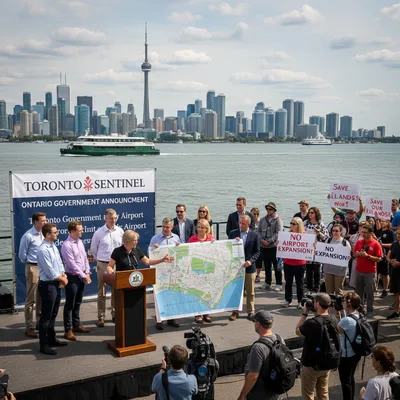
The proposal has sparked considerable backlash from communities along the planned route, particularly in eastern Ontario. A coalition of mayors, farmers, and residents from the Kingston area has voiced strong opposition, citing fears that the rail corridor would divide communities, disrupt farming operations, and require widespread land expropriation.
Concerns from agricultural groups have been particularly prominent. Both the Ontario Federation of Agriculture and the Union des producteurs agricoles, Quebec's largest farm union, have called for the project to be paused to address the potential loss of valuable farmland. At least five municipalities in the region have formally passed resolutions opposing a southern alignment of the track, while another has rejected a northern route option.
Alto is currently studying two main corridor options for the section through eastern Ontario: a direct route connecting Ottawa and Peterborough, or a more southerly alignment. The choice of route has major implications for land use and local economies, reminiscent of the widespread impact of major housing projects, such as the one causing concern for Auckland schools.
Conditional support and uncertain future
While some communities are firmly opposed, others have offered conditional support. Kingston's city council, for example, has backed the southern route, but only if it includes a stop in the city and runs parallel to the Highway 401 corridor to protect environmentally sensitive lands. These conditions are not part of Alto's current plans, leaving the city's support in question.
Carney Liberals will confiscate farmland and private property, disrupting communities and harming the quality of life of local residents who will not even get to use the train because it won’t have any stops near their homes.
Poilievre seized on these local concerns, arguing the project would negatively affect residents without providing tangible benefits. He claimed the government would "confiscate farmland and private property, disrupting communities and harming the quality of life of local residents who will not even get to use the train because it won’t have any stops near their homes."
With a federal election potentially on the horizon, the future of the multi-billion-dollar project remains uncertain. The starkly different visions for infrastructure development laid out by the government and the opposition mean the high-speed rail line will likely continue to be a subject of intense political and public debate.